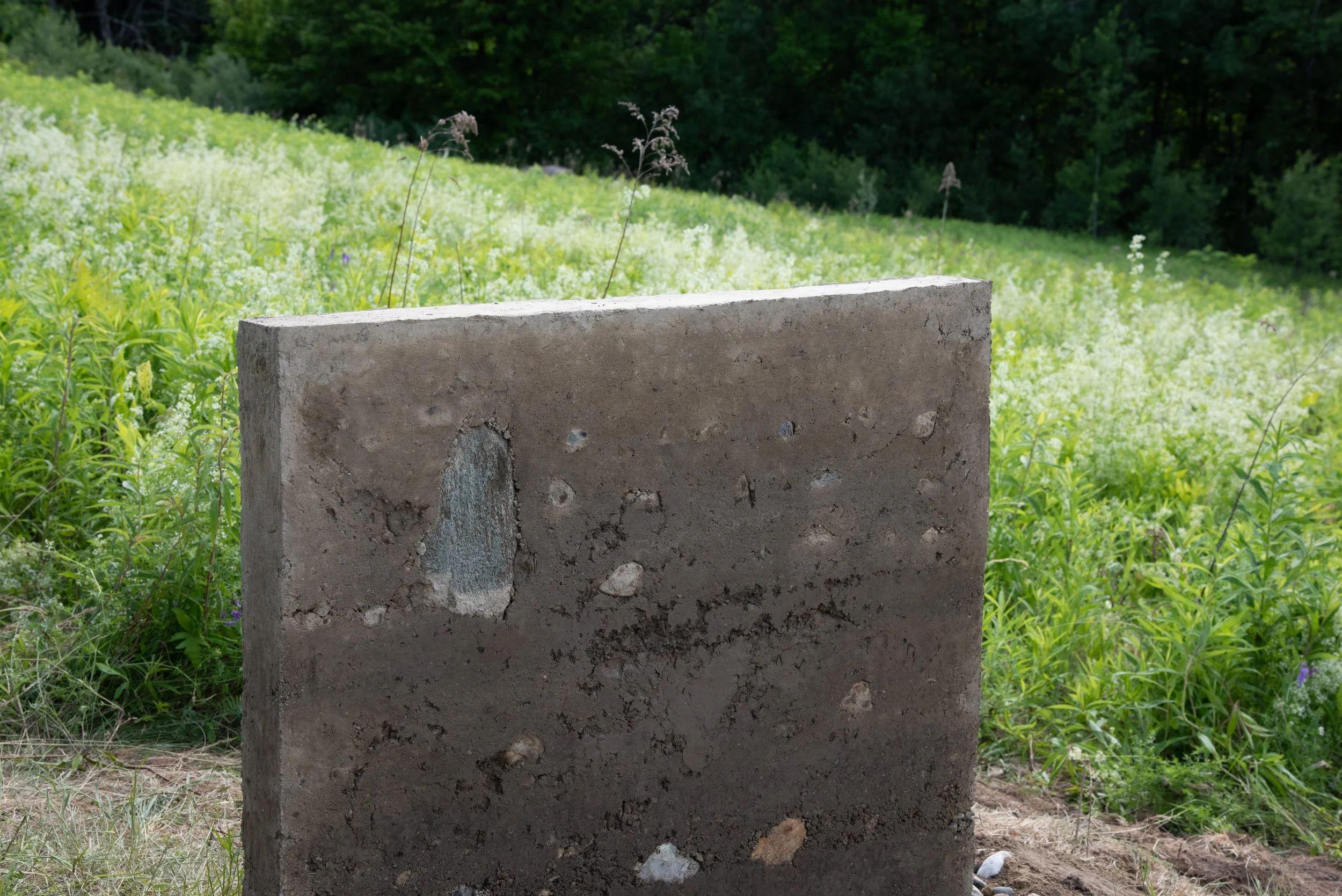
I Am The Space Where I Am: Meadow Corner
Site-specific installation at In Situ: Polyculture Commons in Saxton River, Vermont, 2026
Medium: earth and stone (no stabilizers)
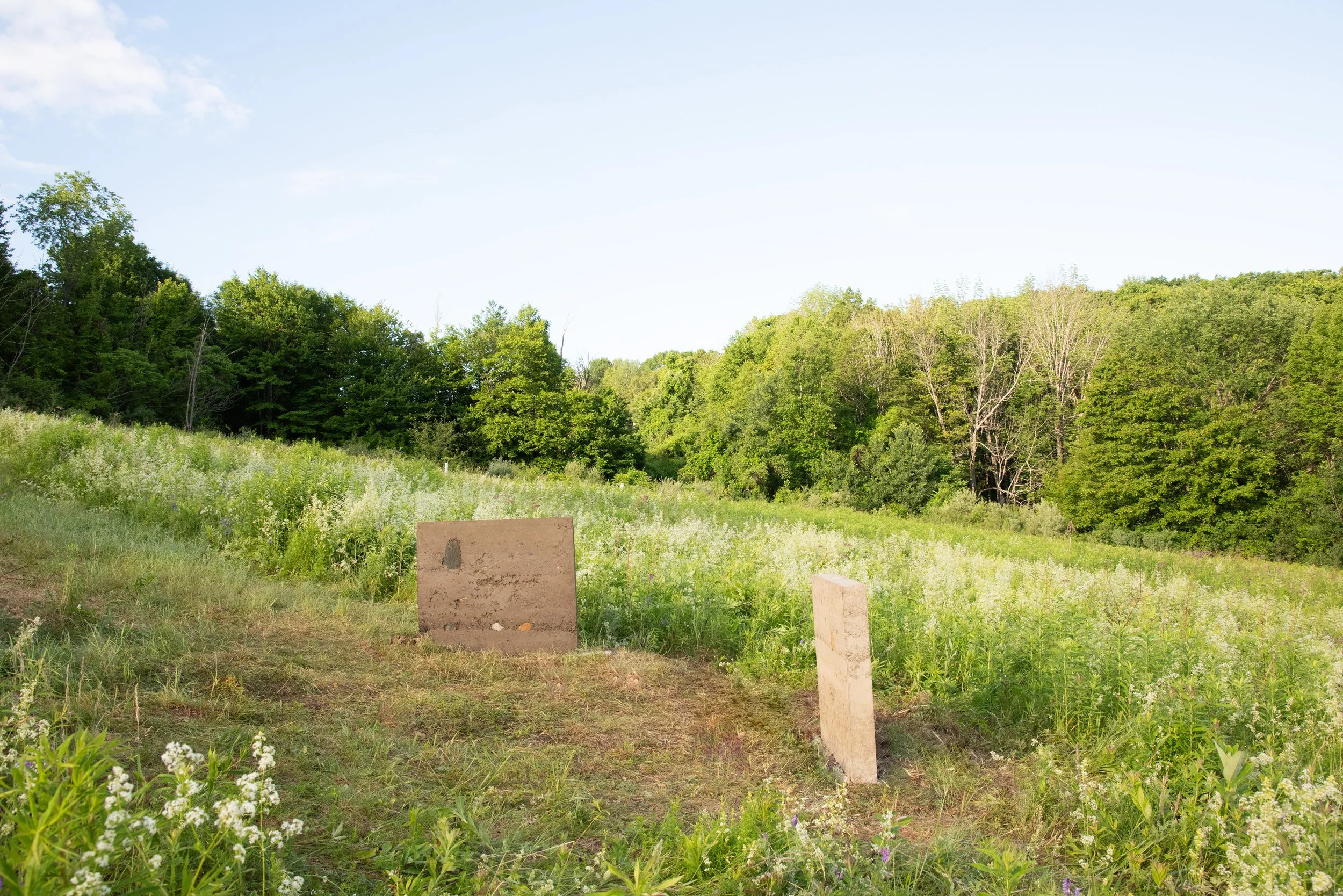
Scale: Each earth wall is approx. 32” X 30” X 4”
Collaboration with: Arseny Pekurovsky
Project Description: We dig. We unearth. We bend. We gather. We haul. We carry. We lug. We reconfigure. We mold. We test. We press. We ram. We pat. We caress. We hold. We let go. We wait. We see.
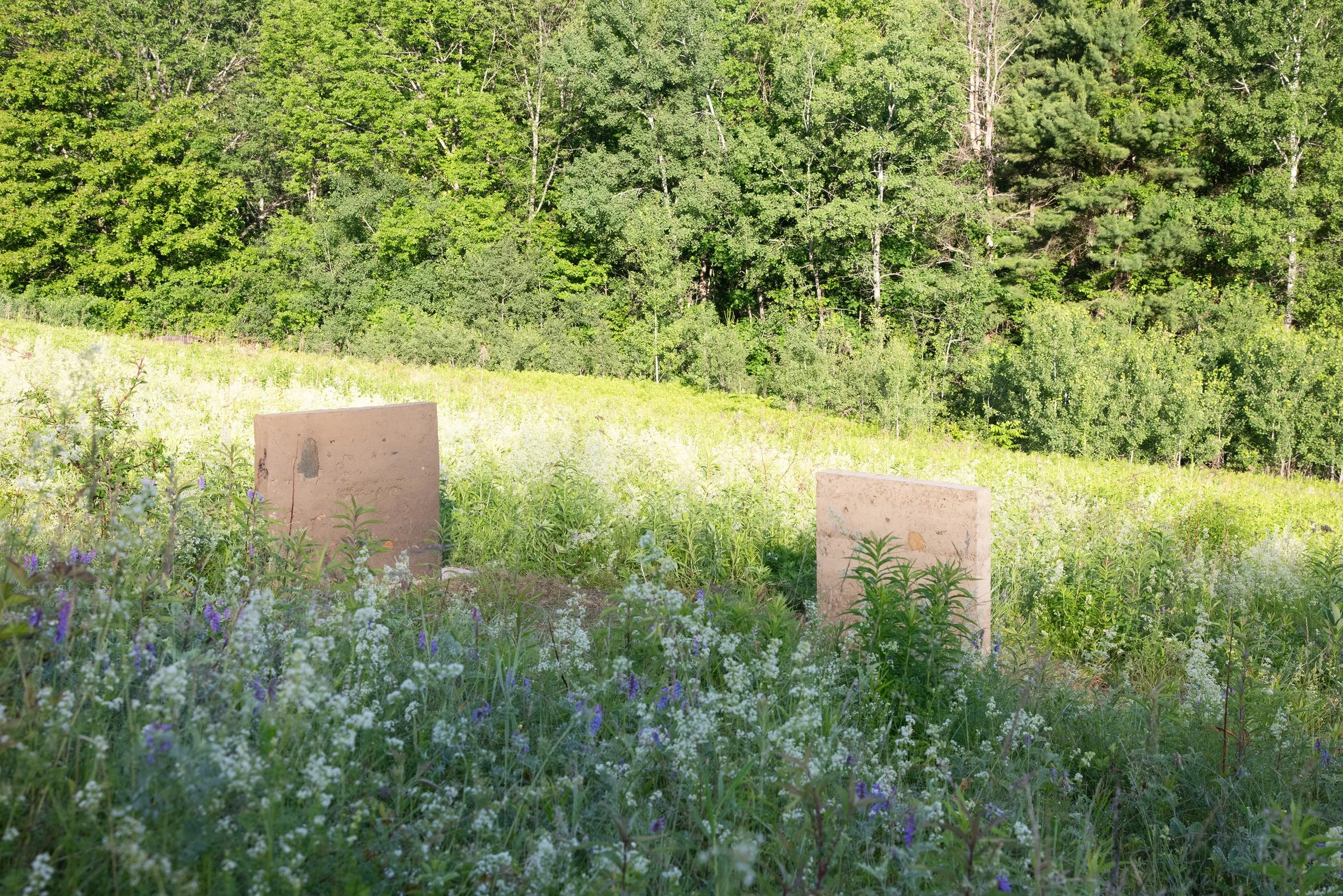
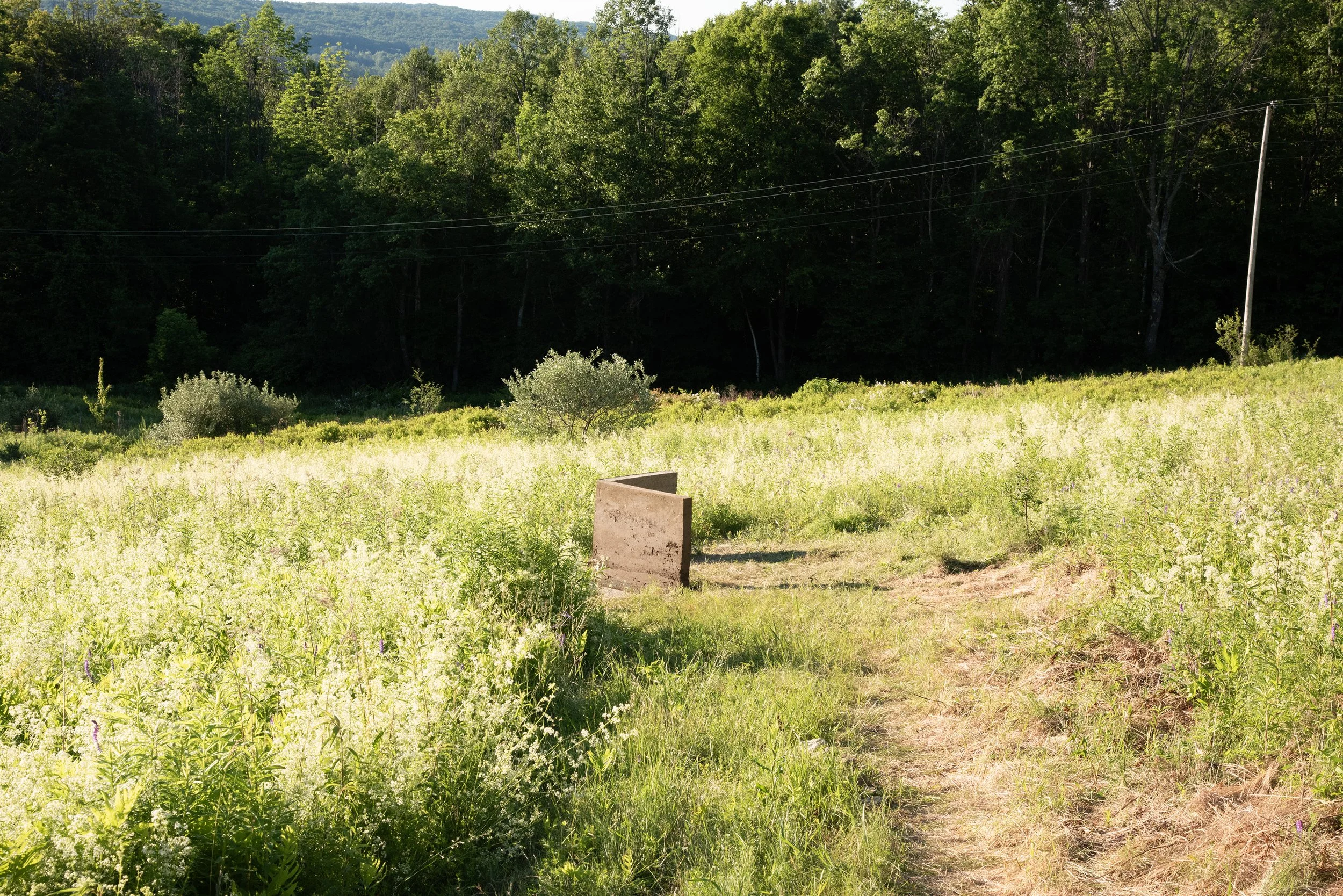
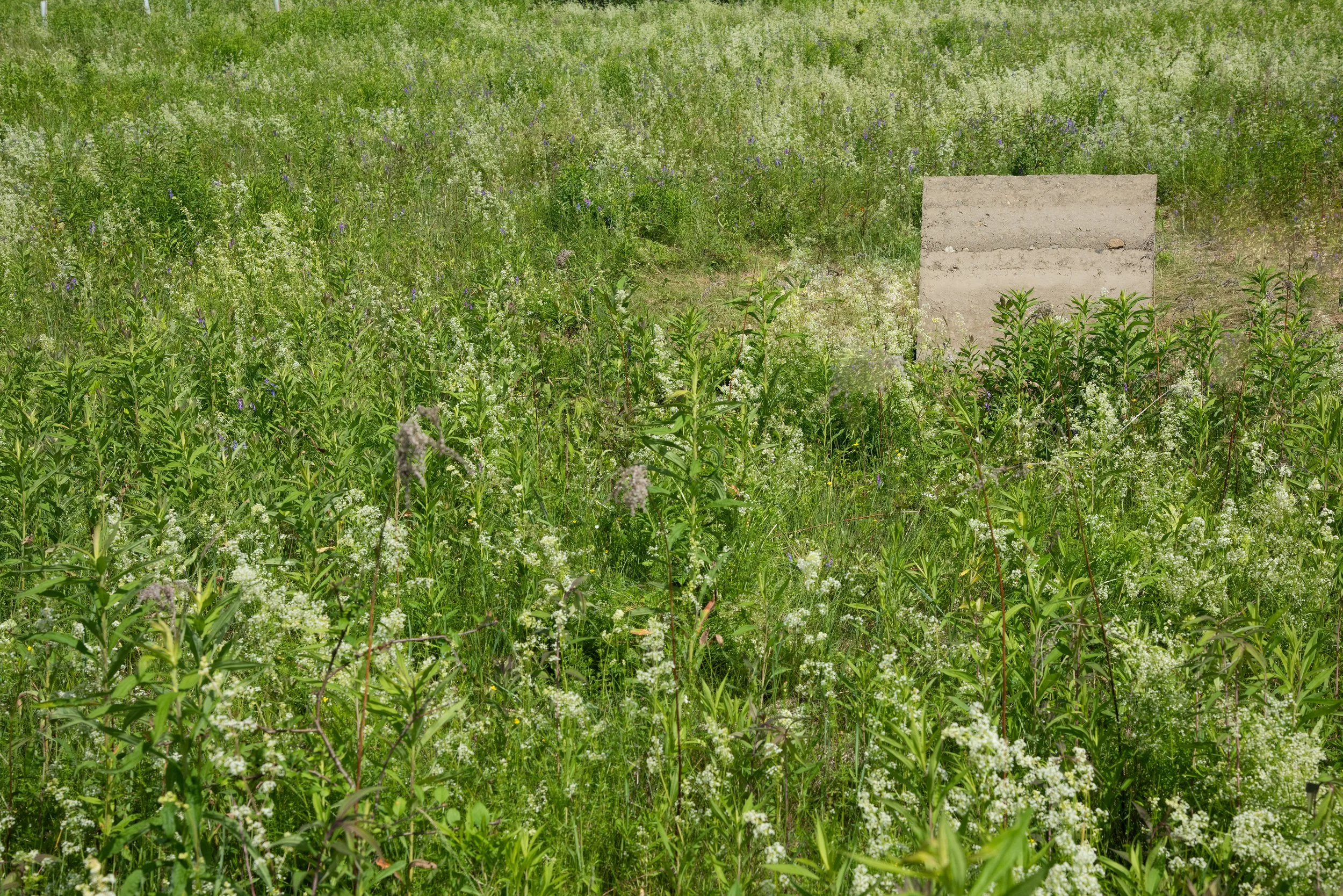
To build a corner in the meadow. Two individual porous walls of compacted earth and stone from the meadow are constructed in relation to each other at right angles to suggest a corner. To emphasize a fleeting, wandering, spacious “corner,” we placed the walls apart in such a way (one pointing west, one north) that depending on where one stands in the meadow, the walls align in order to create what looks like a corner. At other vantage points, the walls are separate. In this way, the corner is in effect invisible, absent, suggested, evoked. Nature, the land, space — the “unbuilt,” or "uncivilized" — is what completes the imaginary angle or curve of a “corner,” where a dreamer might take refuge. We built this piece out of earth from the local landscape, using no stabilizers. We also built the walls to be as thin as possible, because we wanted to encourage an image (and thing) of fragility. Eventually, the rain, winds, storms, and weather in general, as well as those living in the land (flora and fauna) will reclaim the earth that is theirs to begin with.
We hope to invite viewers to dwell on the ground under our feet, to remember that we’re earthlings, and to enter into a different kind of time and space – a pace of earth – encouraging a relationship of intimacy with matter. We humans are earth’s skin in some sense – our bodies, shadows and even our voices (though more invisibly), cast layers of being on earth. We’re earth’s shawl, just as it ours.
“We suspect that by questioning the foundations of civilization, the myth of human centrality, the imagined isolation, we may find the beginning of new paths…If we are right, it will be necessary to go literally beyond the Pale. Outside the stockades we have built – the city walls, the original marker in stone or wood that first separated “man” from “nature.” Beyond the gates, out into the wilderness, is where we are headed. And there we shall make for the higher ground for, as Jeffers wrote, ‘when the cities lie at the monster’s feet/ there are left the mountains.’ We shall make the pilgrimage to the poet’s Dark Mountain, to the great, immovable, inhuman heights which were here before us and will be here after us. And from their slopes we shall look back upon the pinprick lights of the distant cities and gain perspective on who we are and what we have become.”
— Uncivilisation: Dark Mountain Manifesto
“But a klaxon made me come out of the angle where I was beginning to die of an angel's dream."
— Czeslaw Milosz