Song of Amergin, Multiple installations at the Hambidge Center, Rabun Gap, GA, 2019; Klaus Von Nichtsaggend in New York, NY, 2019; and 544 Park Ave, Brooklyn, NY, 2019
This work grew out of my interest in the “The Song of Amergin” – what is considered to be the “first Irish poem.” The poem is an incantation that the druid and bard Amergin Glúingel is said to have uttered on a ship to invoke the spirit of Ireland before landing on the coast of the land to conquer the Tuatha Dé Danann.
As a way to think through this poem, I constructed a series of dyed and painted panels of semi-sheer cotton muslin which I combined to form quilt-like paintings. I made a painting for each line of the poem – a total of 12 works based on 12 “I Am” lines. Each line begins as an “I am” (the poem goes “I am a stag: of seven tines/ I am a flood: across a plain/ I am a wind; on a deep lake…”), and as such, traces a different iteration of an “I.”
I was interested in how “The Song of Amergin” both serves as an origin story for the Irish identity – being this purportedly original utterance, original representation – an identity that is invoked emphatically as an all-consuming “I” – and at the same time suggests an identity that appears to radically slip, slide, dissolve. What Muldoon describes as a kind of “promiscuous provenance,” remarking on Amergin’s “tireless reinvention of himself as stag or flood or wind or howl,” and his explicit self-identification with threshold itself as an “unhewn dolmen arch.” One could say the poem is thus itself a symptom of liminality.
Overall, my project became a work that has to do with the fragment, the non-unified, the changeable, the misaligned, the fixed and unfixed, the possibility of rearrangement, the gesture as opposed to the thing, something in flux. The work is a piecemeal conglomeration that is not nameable as a singular whole because its parts refuse to come into alignment. Each of these units is the body of Amergin – by virtue of that, it investigates being. Each individual panel within the painting (there are twelve panels per painting, per “I” iteration) becomes the thing describes (wave, plant, boar, sun, etc.). But each iteration — a summoning — of the thing, is also limited and curtailed by positionality. As Donna Haraway writes, "Subjectivity is multidimensional; so, therefore, is vision."
Change, double-ness, how things stay the same and how things change. What is a thing? When does it become a thing and when does become an un-thing? When does the noun become the noun, when does the noun turn into a verb or an adjective? Nameable state with discrete borders (difference first), then sameness.
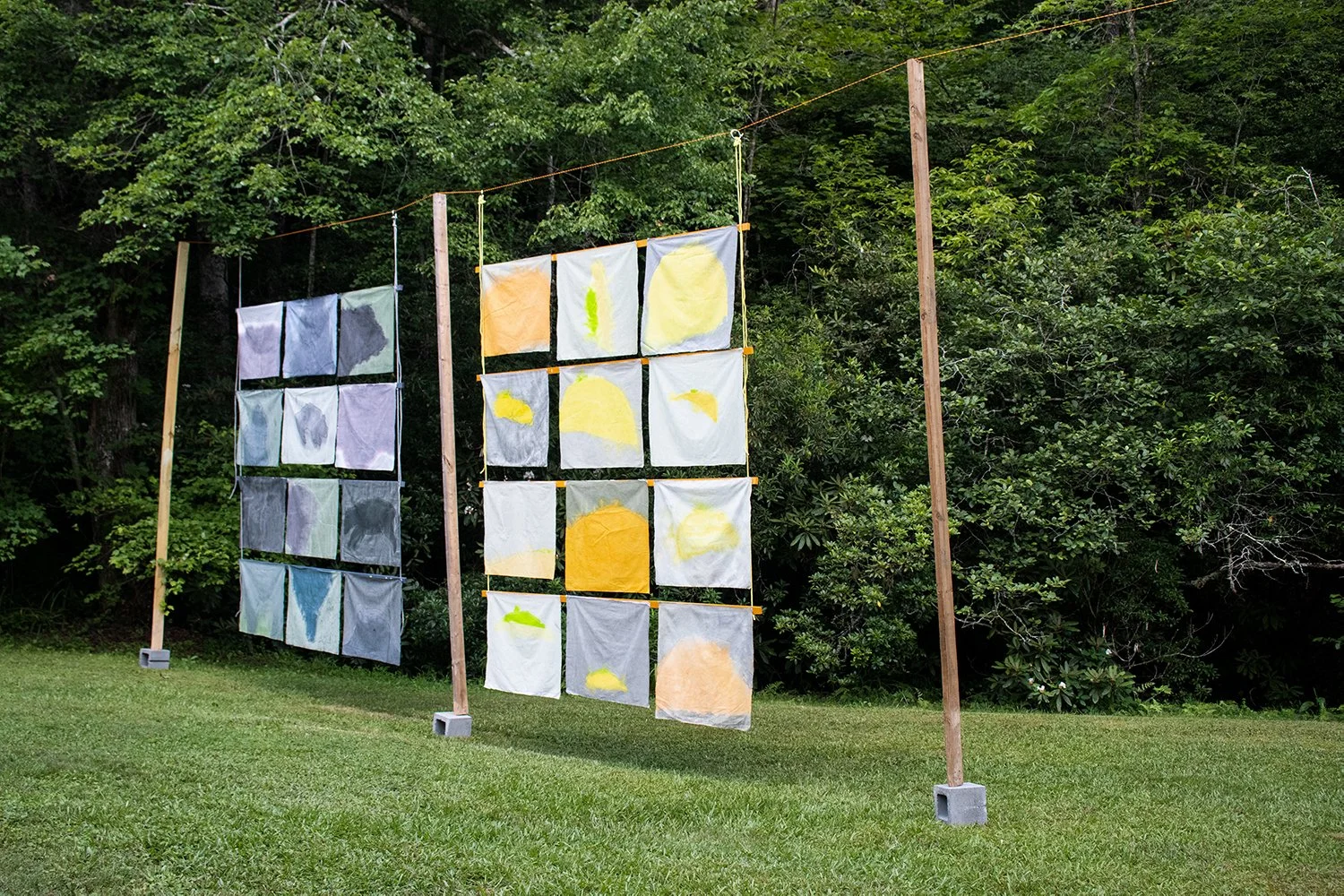
Song of Amergin (Floating with support, outdoors), Acrylic, dye, muslin, rope, wood, cinder blocks, Installation at the Hambidge Center for the Arts, Rabun Gap, GA, 2019
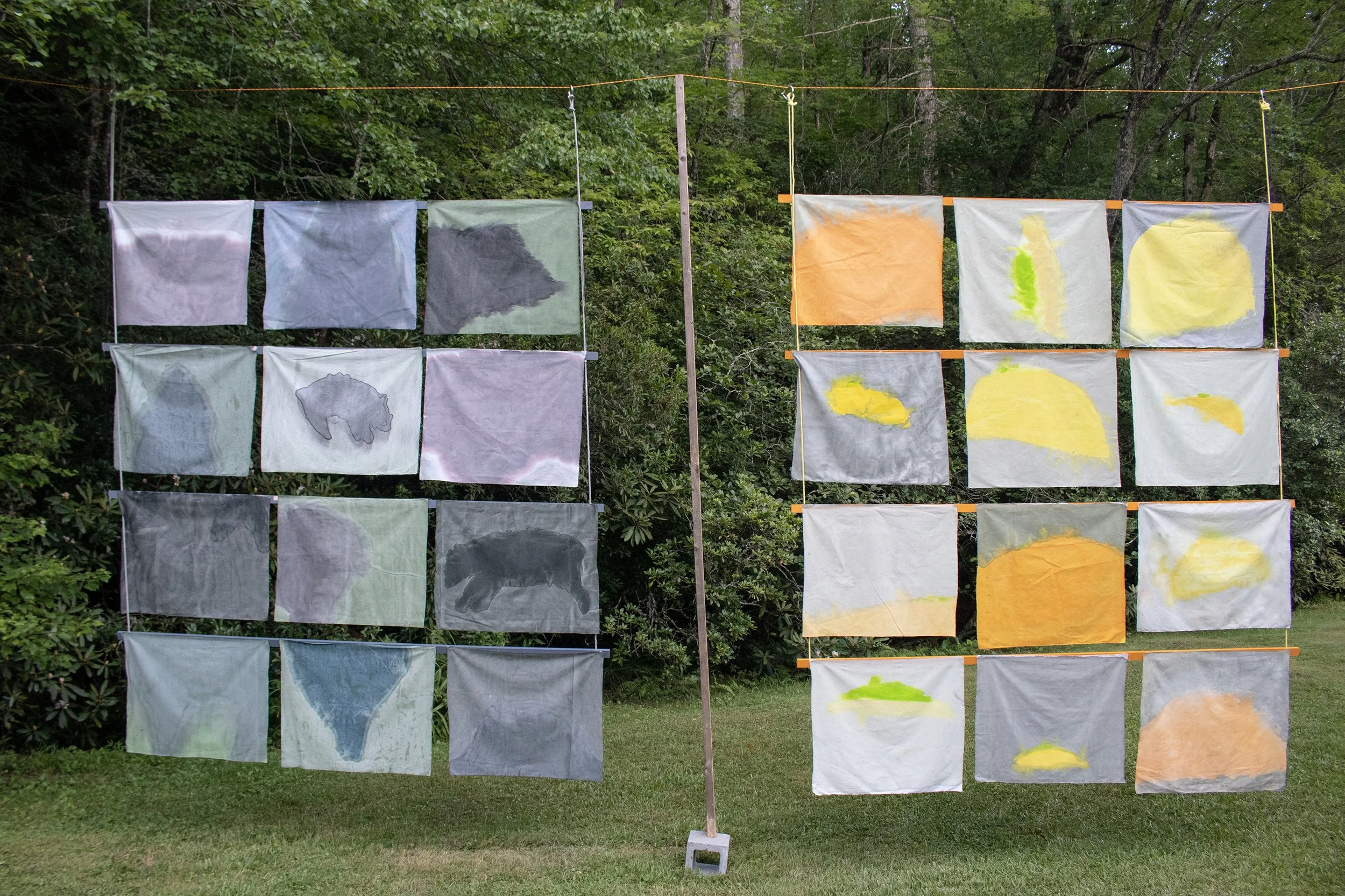
Song of Amergin (Floating with support, outdoors), Acrylic, dye, muslin, rope, wood, cinder blocks, Installation at the Hambidge Center for the Arts, Rabun Gap, GA, 2019
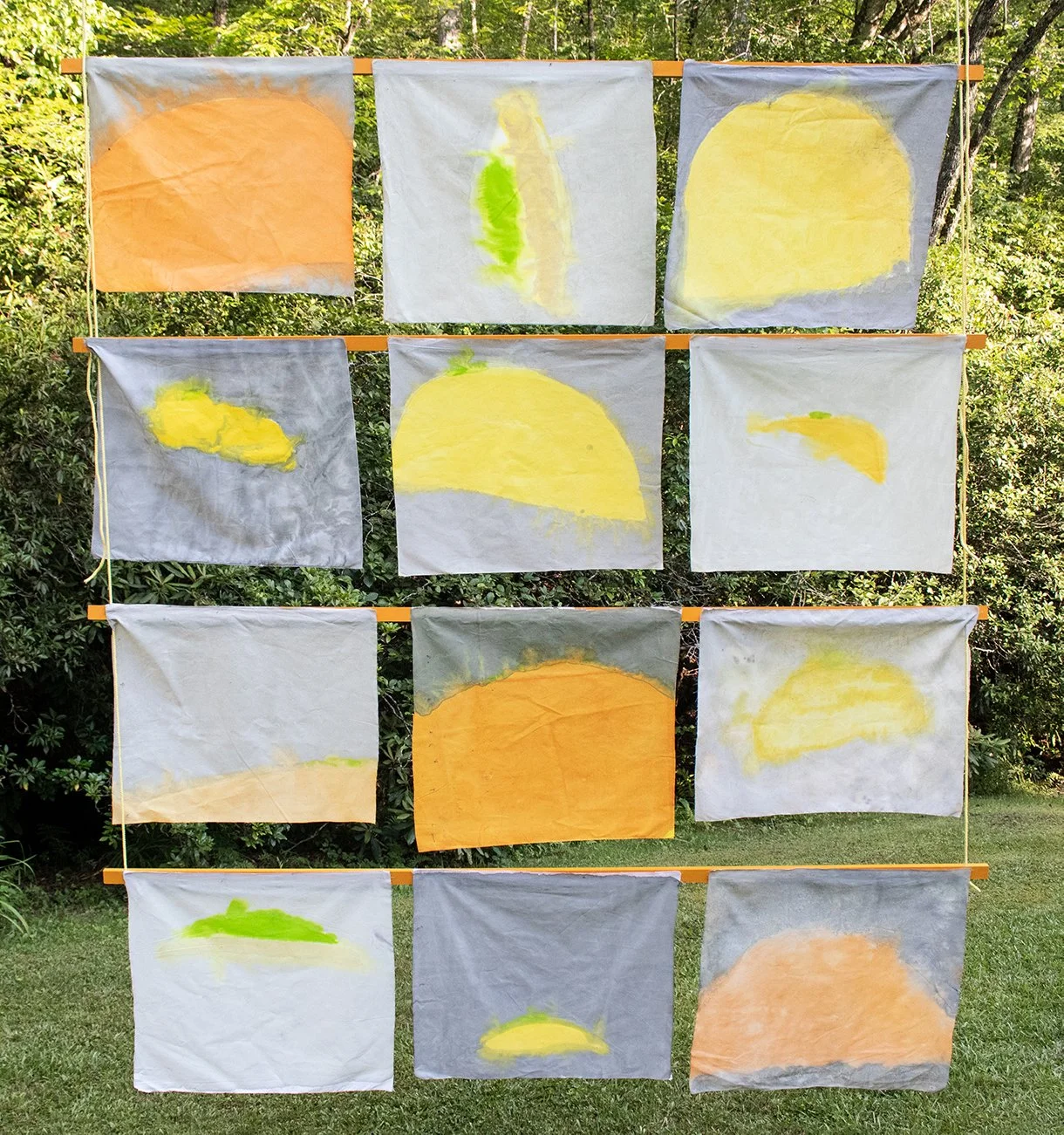
Song of Amergin (Floating with support, outdoors), Am séig i n-aill/I am the tear of the sun, Acrylic, dye, muslin, rope, wood, cinder blocks, 120” X 96”, Installation at the Hambidge Center for the Arts, Rabun Gap, GA, 2019
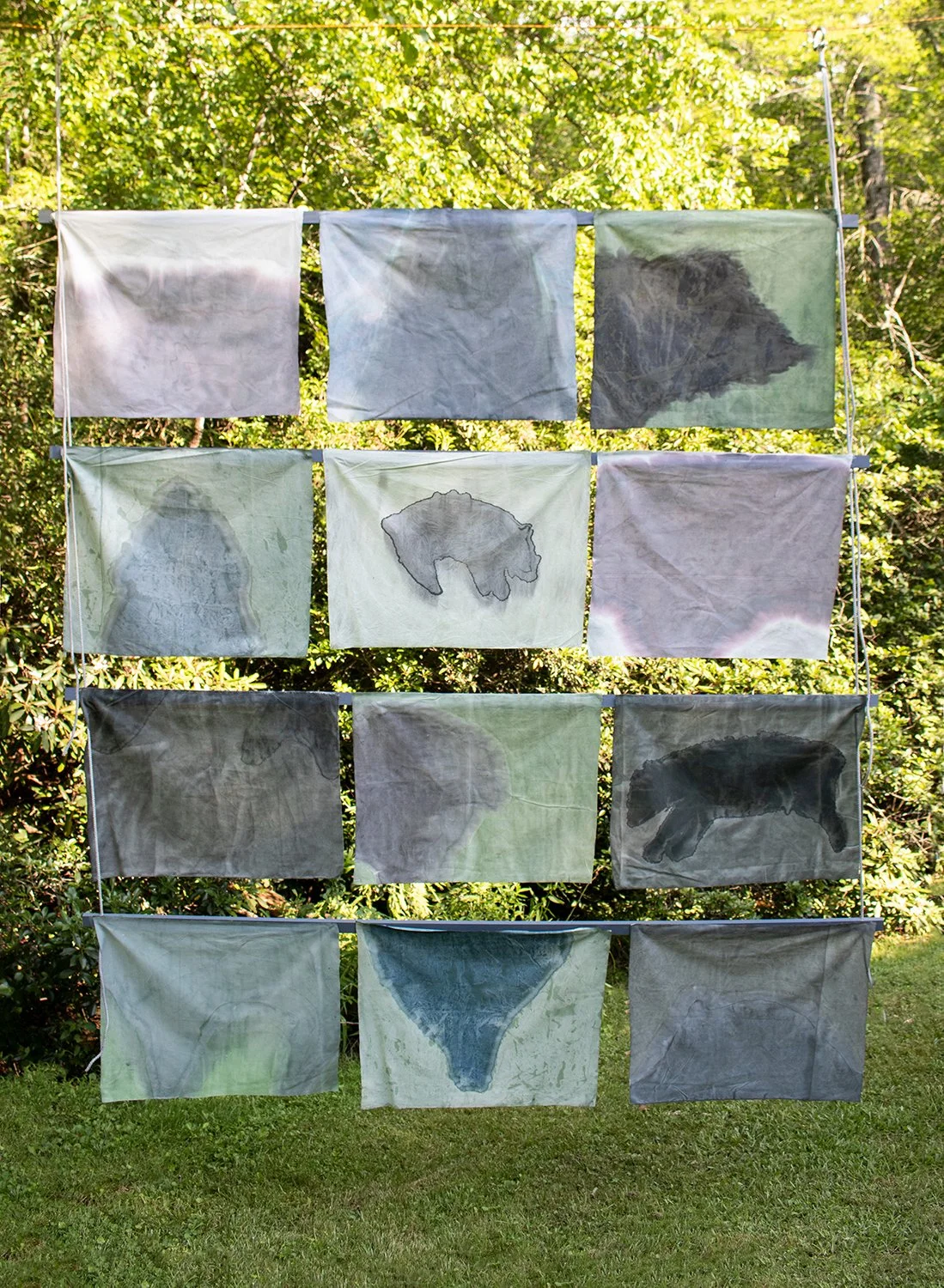
Song of Amergin (Floating with support, outdoors), Am Torc Ar Gail/I Am A Strong Wild Boar, Acrylic, dye, muslin, rope, wood, cinder blocks, 120” X 96”, Installation at the Hambidge Center for the Arts, Rabun Gap, GA, 2019
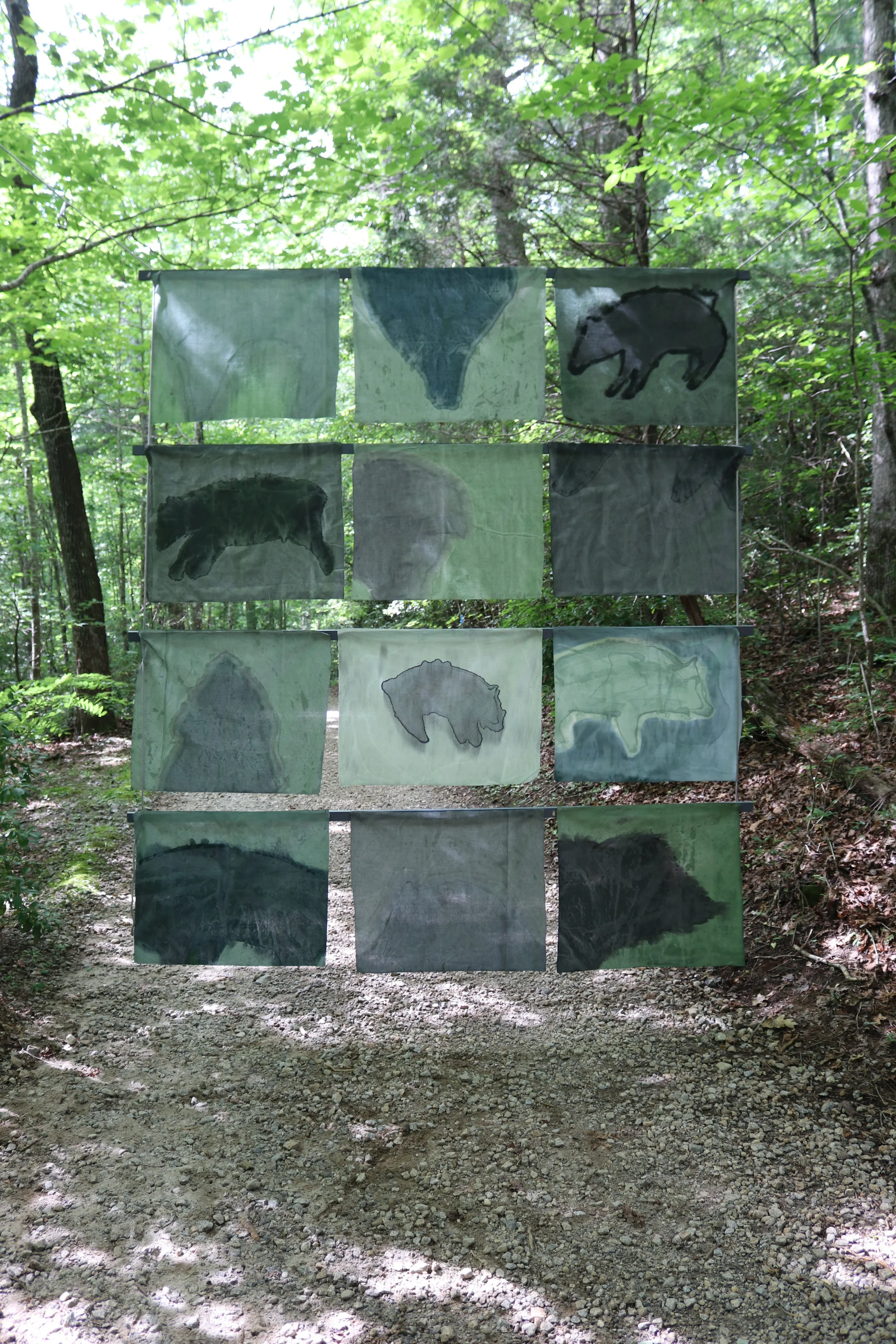
Song of Amergin (Floating, outdoors), Am Torc Ar Gail/I Am A Strong Wild Boar, Acrylic, dye, muslin, rope, 120” X 96”, Installation at the Hambidge Center for the Arts, Rabun Gap, GA, 2019, view i
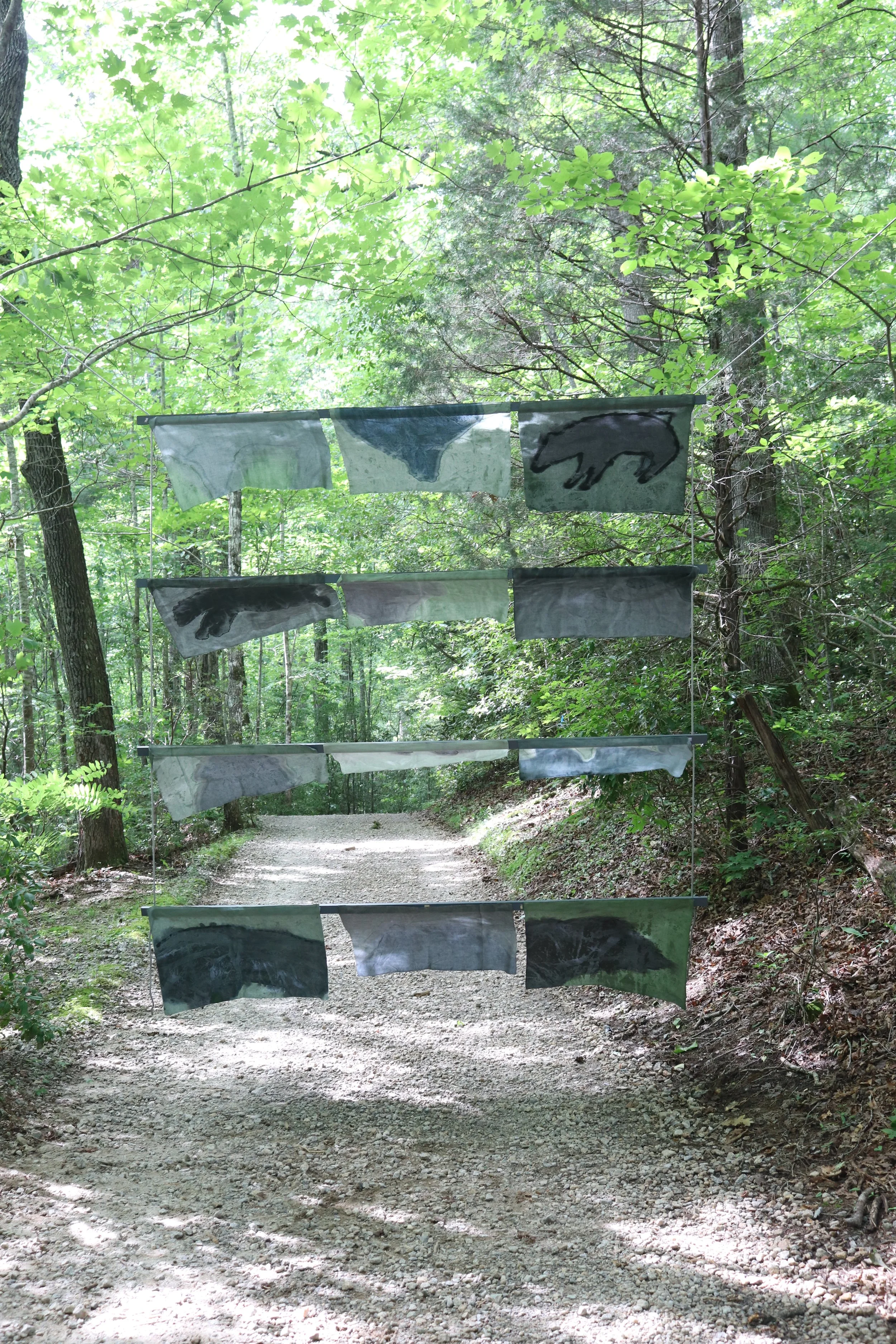
Song of Amergin (Floating, outdoors), Am Torc Ar Gail/I Am A Strong Wild Boar, Acrylic, dye, muslin, rope, 120” X 96”, Installation at the Hambidge Center for the Arts, Rabun Gap, GA, 2019, view ii
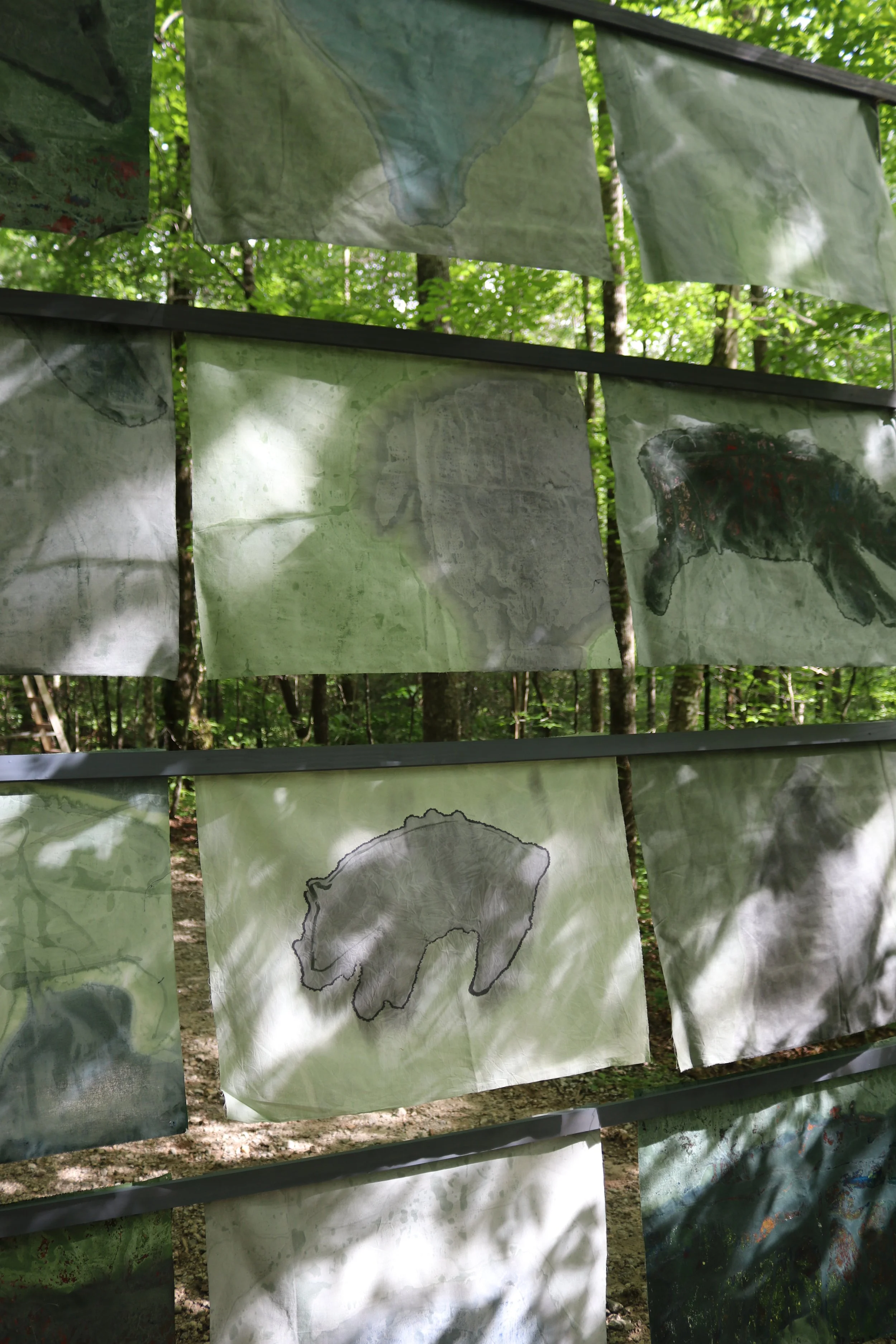
Song of Amergin (Floating, outdoors), Am Torc Ar Gail/I Am A Strong Wild Boar, Acrylic, dye, muslin, rope, 120” X 96”, Installation at the Hambidge Center for the Arts, Rabun Gap, GA, 2019, (detail i)
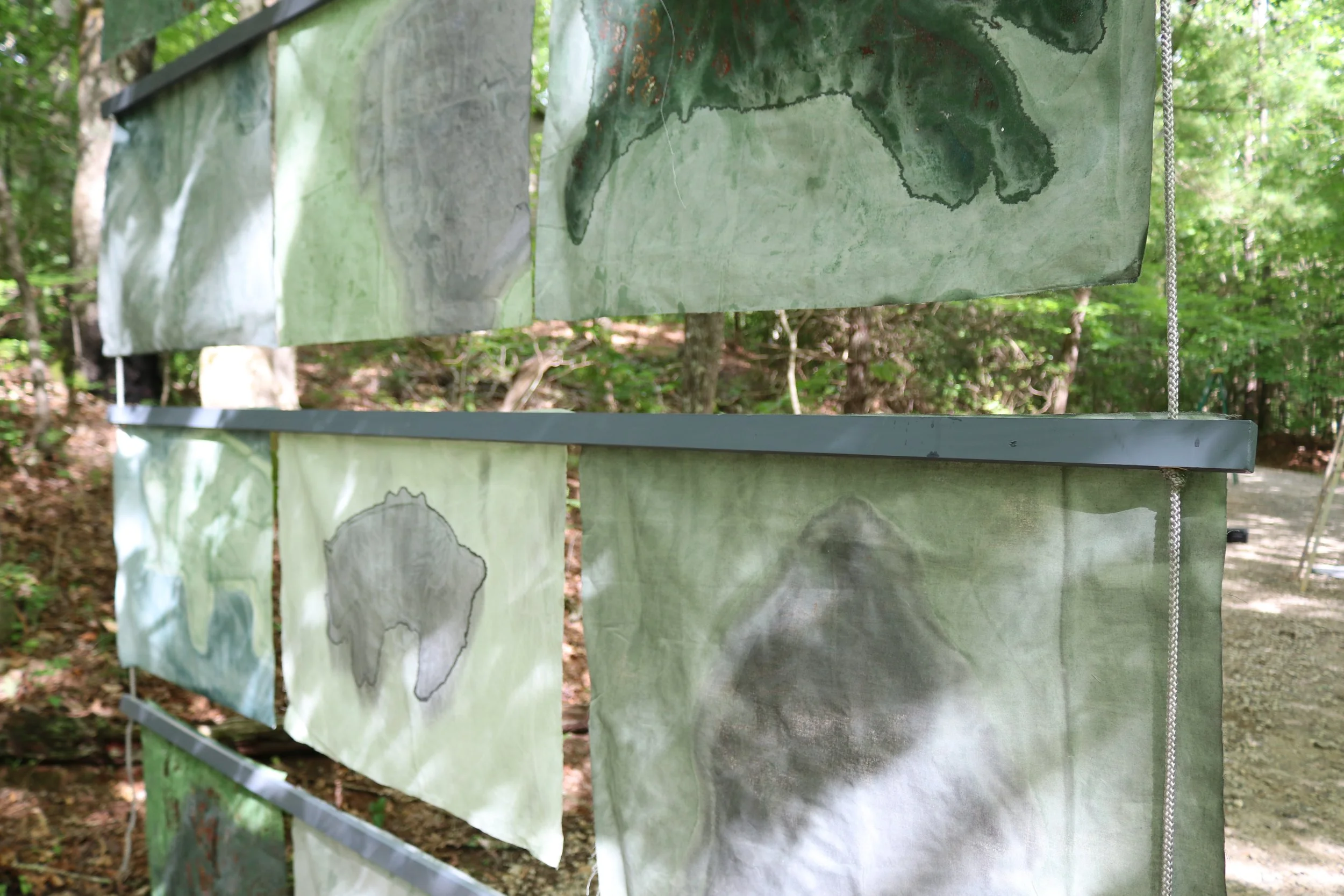
Song of Amergin (Floating, outdoors), Am Torc Ar Gail/I Am A Strong Wild Boar, Acrylic, dye, muslin, rope, 120” X 96”, Installation at the Hambidge Center for the Arts, Rabun Gap, GA, 2019, (detail ii)
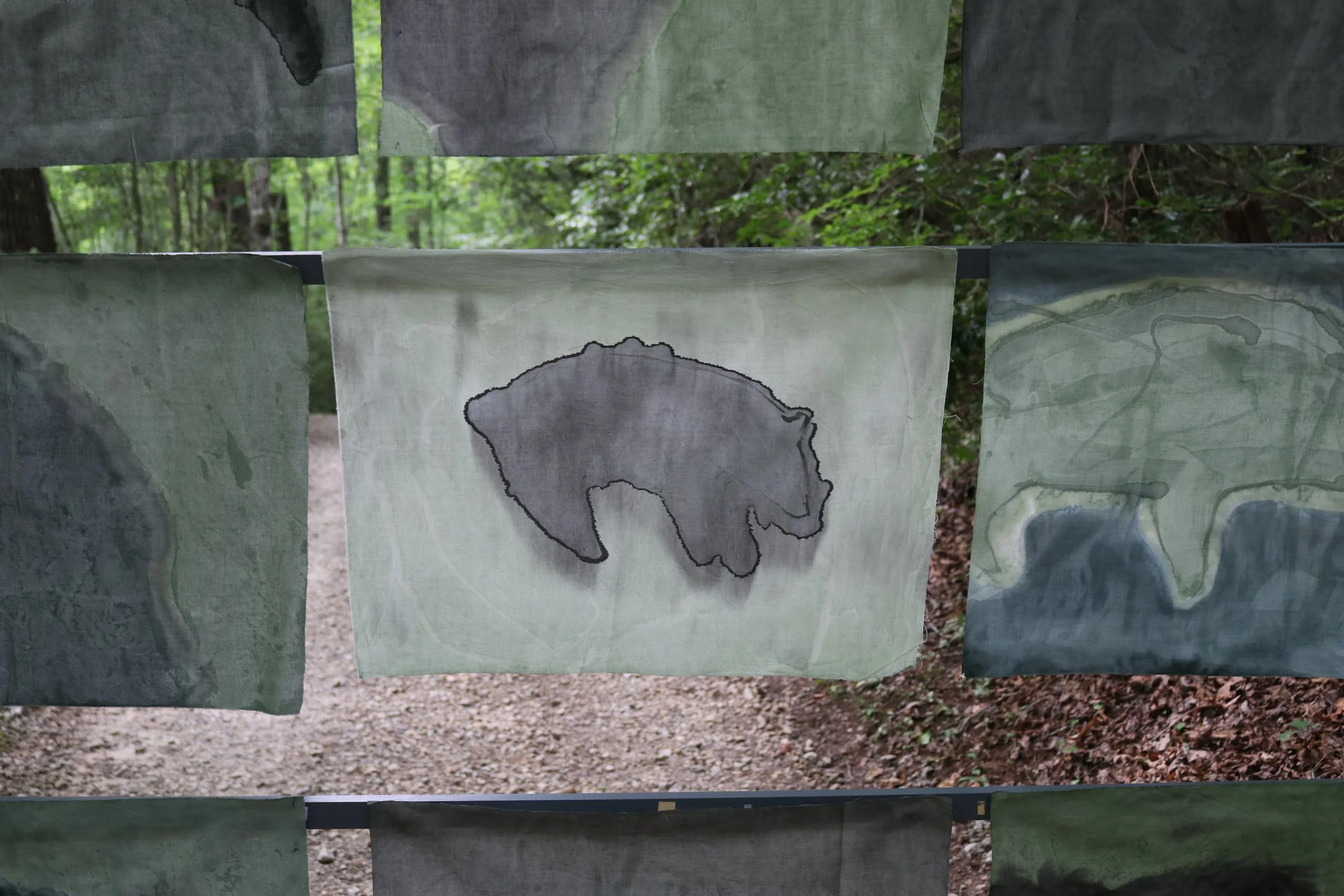
Song of Amergin (Floating, outdoors), Am Torc Ar Gail/I Am A Strong Wild Boar, Acrylic, dye, muslin, rope, 120” X 96”, Installation at the Hambidge Center for the Arts, Rabun Gap, GA, 2019, (detail iii)
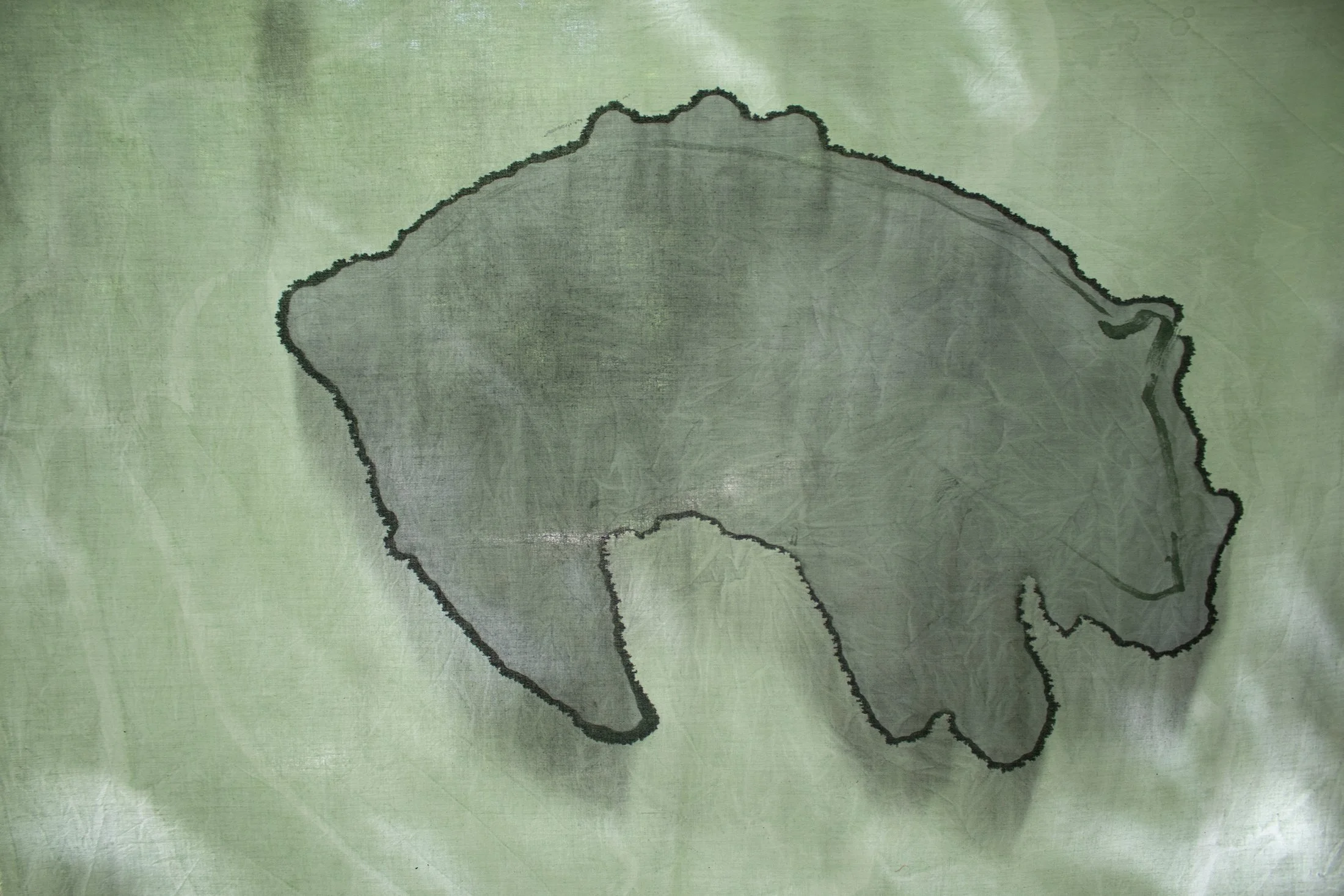
Song of Amergin (Floating, outdoors), Am Torc Ar Gail/I Am A Strong Wild Boar, Acrylic, dye, muslin, rope, 120” X 96”, Installation at the Hambidge Center for the Arts, Rabun Gap, GA, 2019, (detail iv)
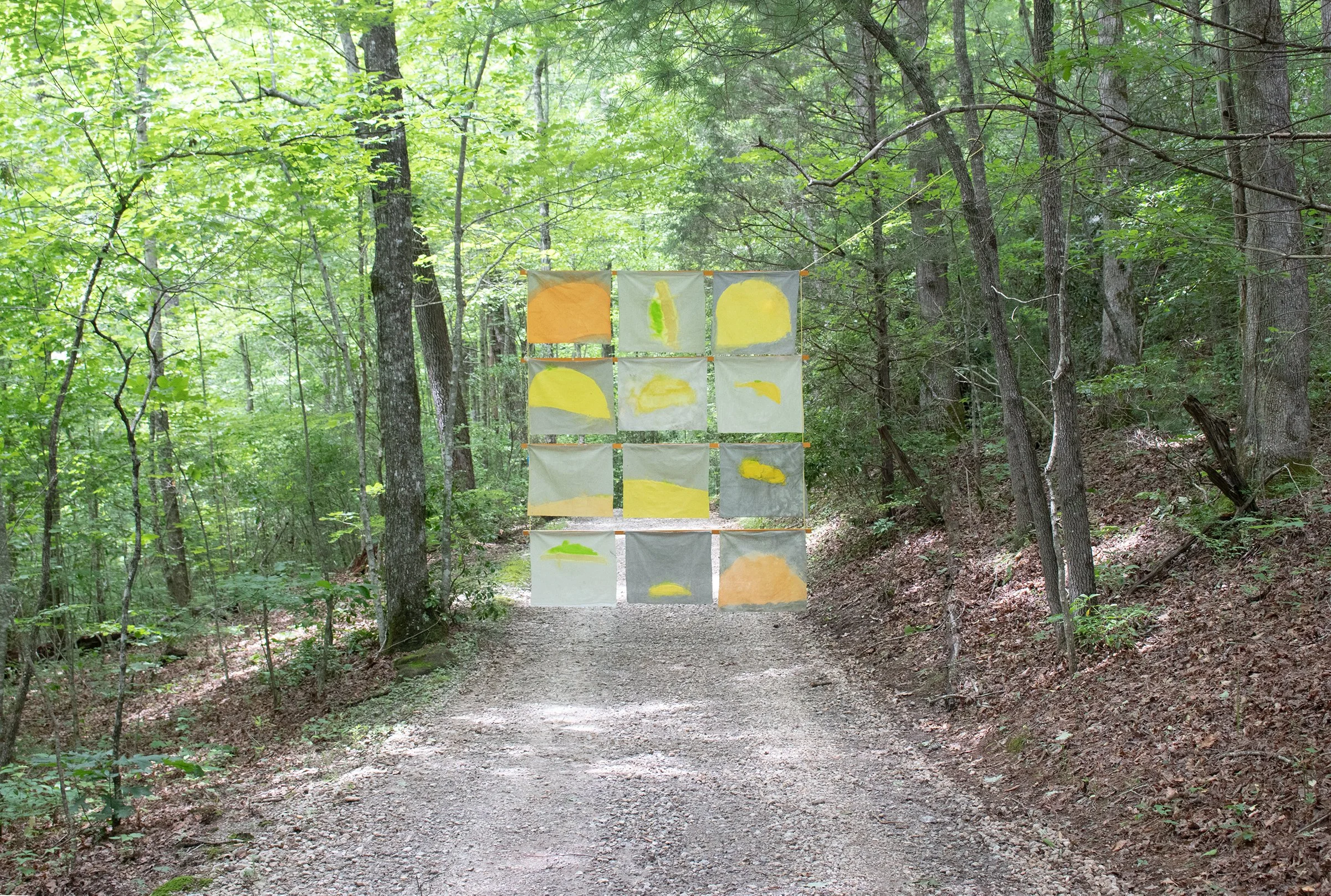
Song of Amergin (Floating, outdoors), Am séig i n-aill/I am the tear of the sun, Acrylic, dye, muslin, rope, 120” X 96," Installation at the Hambidge Center for the Arts, Rabun Gap, GA, 2019
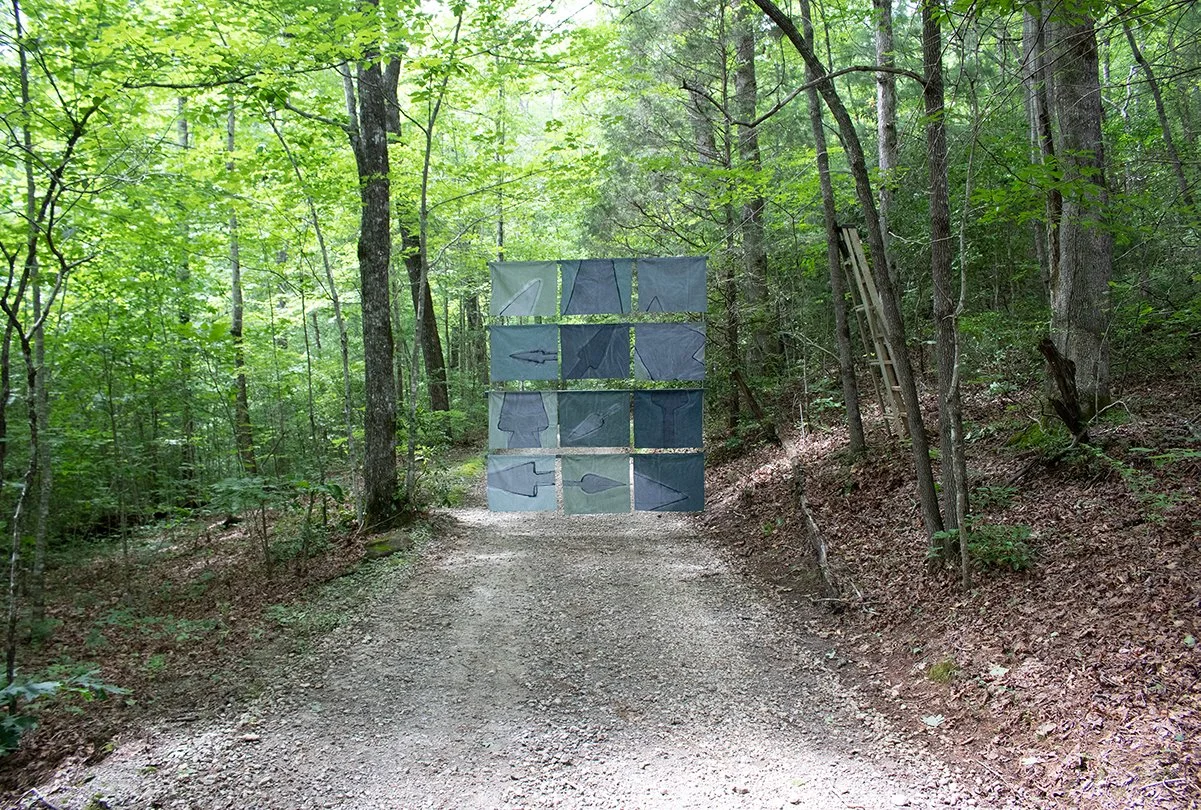
Song of Amergin (Floating, outdoors), Am bri i fodb fras feochtu/I am the head of the spear in battle, Acrylic, dye, muslin, rope, 120” X 96," Installation at the Hambidge Center for the Arts, Rabun Gap, GA, 2019, installation view i
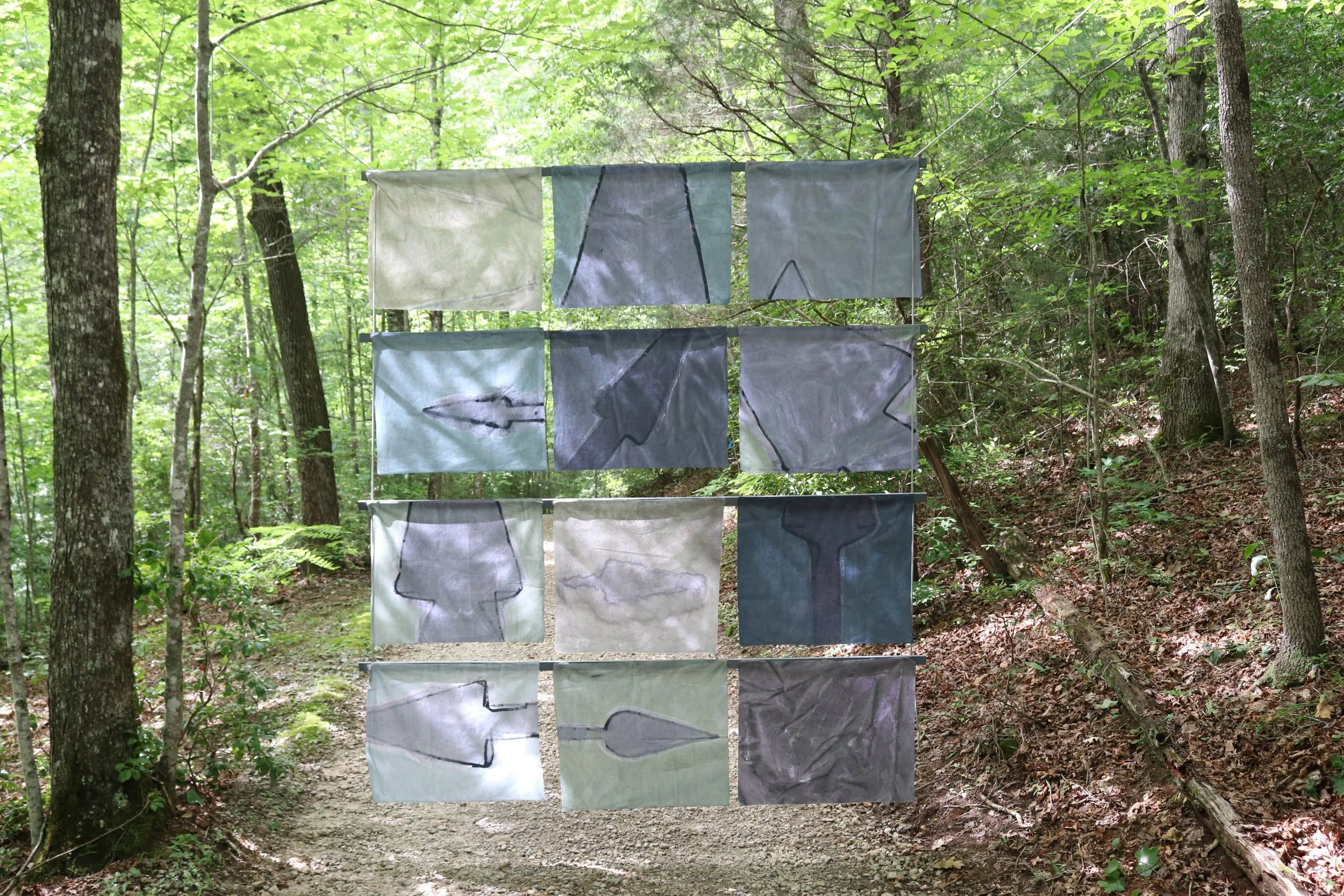
Song of Amergin (Floating, outdoors), Am bri i fodb fras feochtu/I am the head of the spear in battle, Acrylic, dye, muslin, rope, 120” X 96," Installation at the Hambidge Center for the Arts, Rabun Gap, GA, 2019, installation view ii
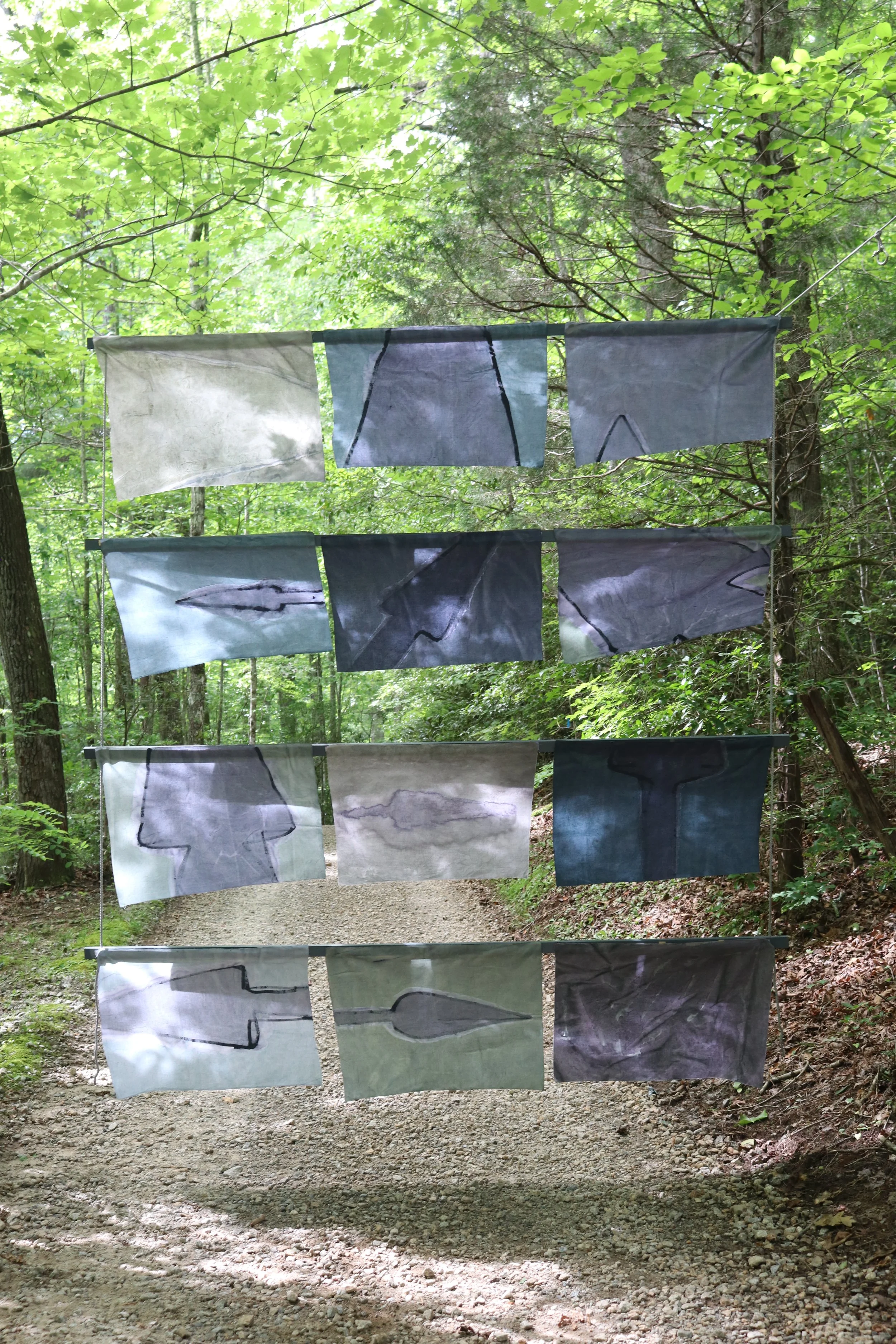
Song of Amergin (Floating, outdoors), Am bri i fodb fras feochtu/I am the head of the spear in battle, Acrylic, dye, muslin, rope, 120” X 96," Installation at the Hambidge Center for the Arts, Rabun Gap, GA, 2019, installation view iii
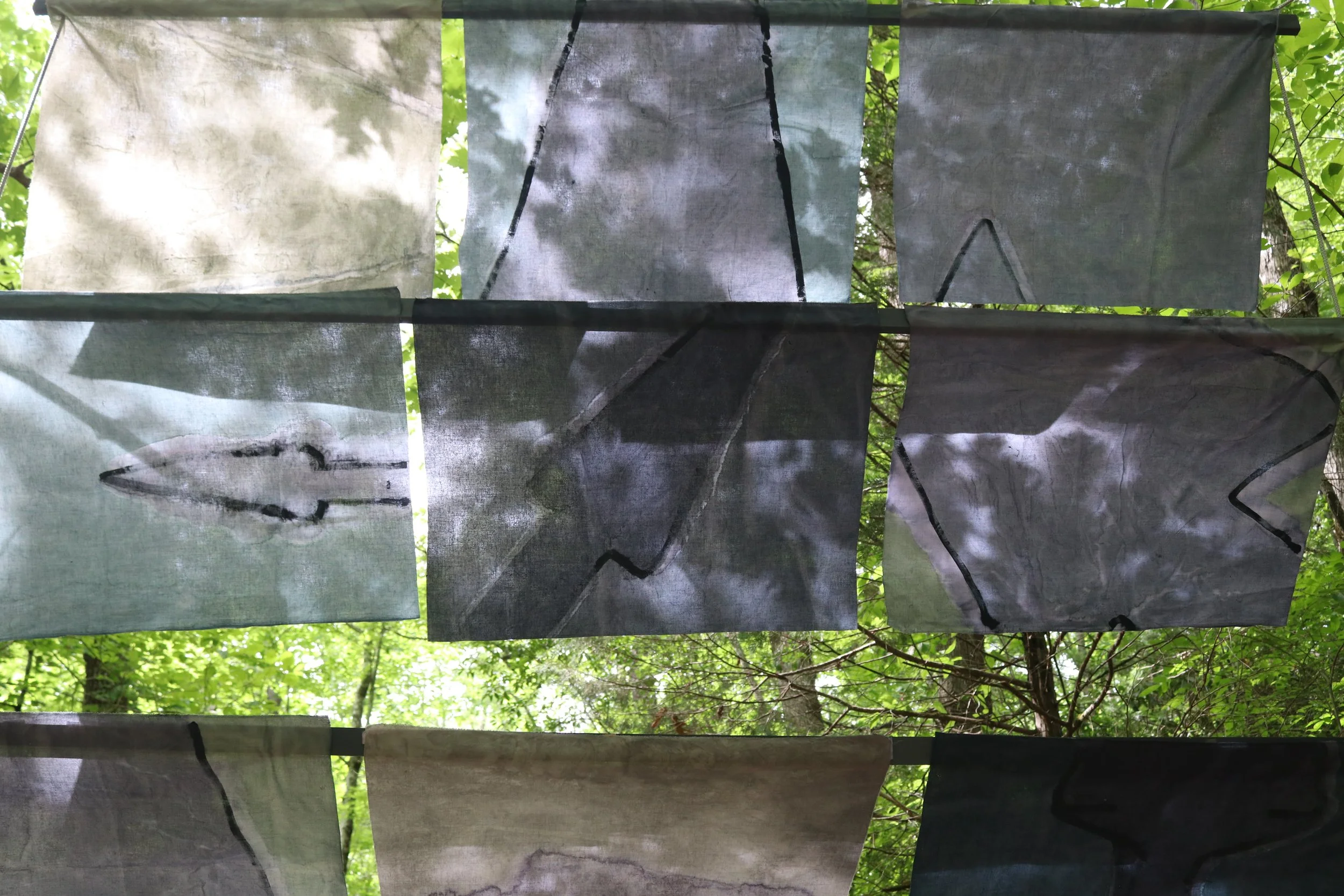
Song of Amergin (Floating, outdoors), Am bri i fodb fras feochtu/I am the head of the spear in battle, Acrylic, dye, muslin, rope, 120” X 96," Installation at the Hambidge Center for the Arts, Rabun Gap, GA, 2019, (detail i)
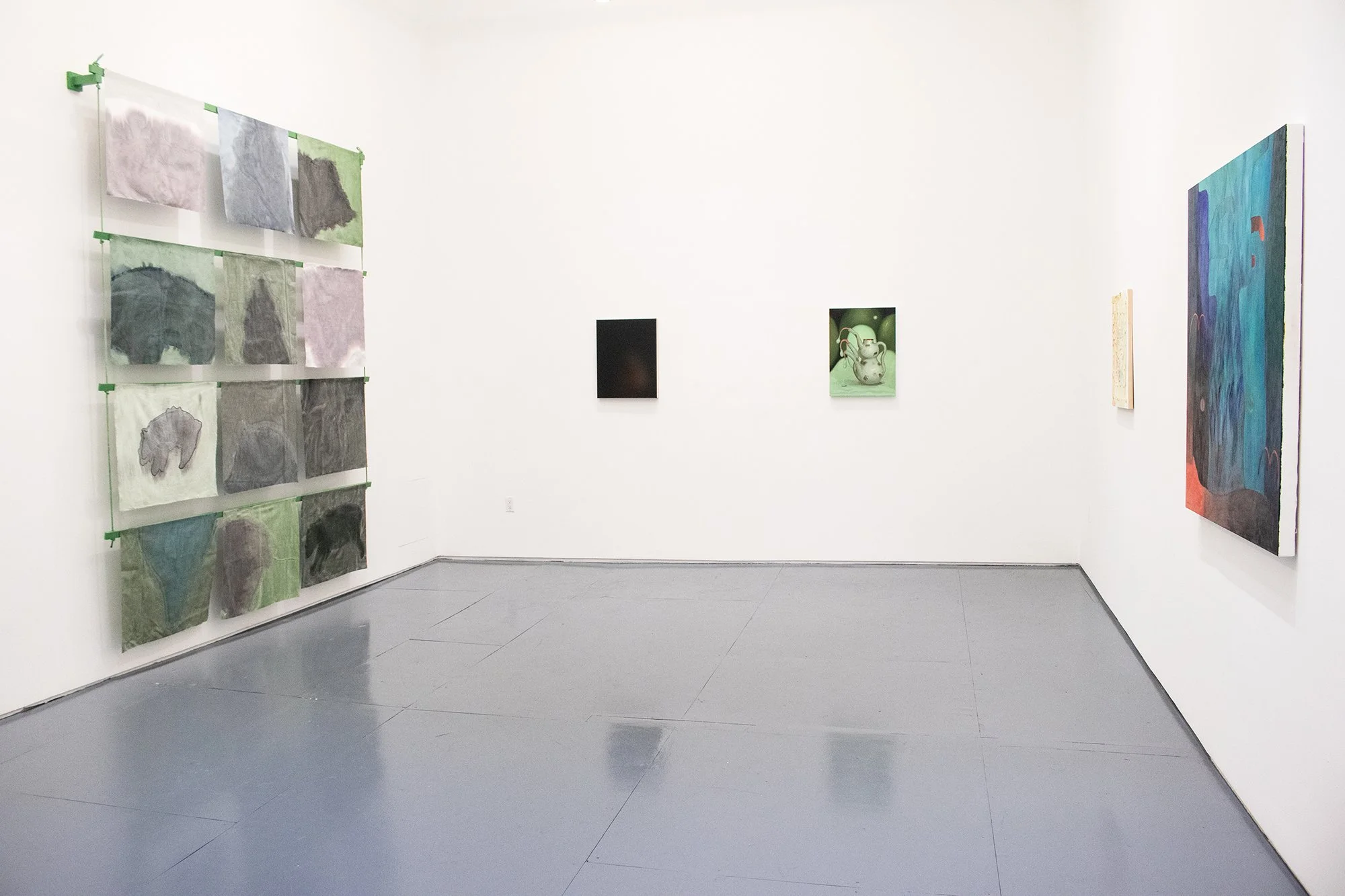
Paint School Exhibition, presented by Shandaken Projects, Klaus Von Nichtssagend Gallery, New York, NY, 2019 Song of Amergin (Floating with wooden support), Am Torc Ar Gail/I Am A Strong Wild Boar, 2019, Acrylic, dye, muslin, rope, wood, 120” X 96," Installation view i
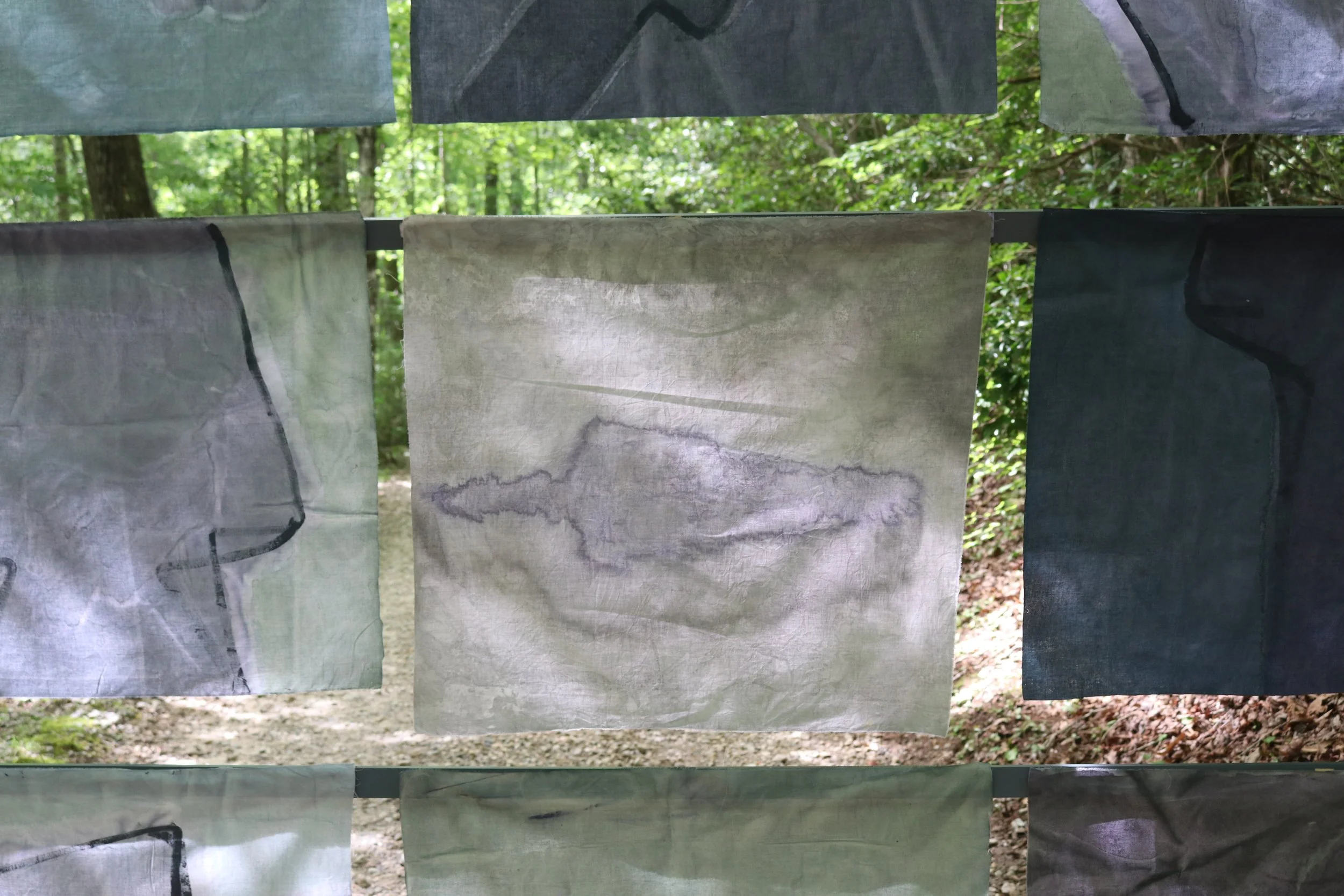
Song of Amergin (Floating, outdoors), Am bri i fodb fras feochtu/I am the head of the spear in battle, Acrylic, dye, muslin, rope, 120” X 96," Installation at the Hambidge Center for the Arts, Rabun Gap, GA, 2019, (detail ii)
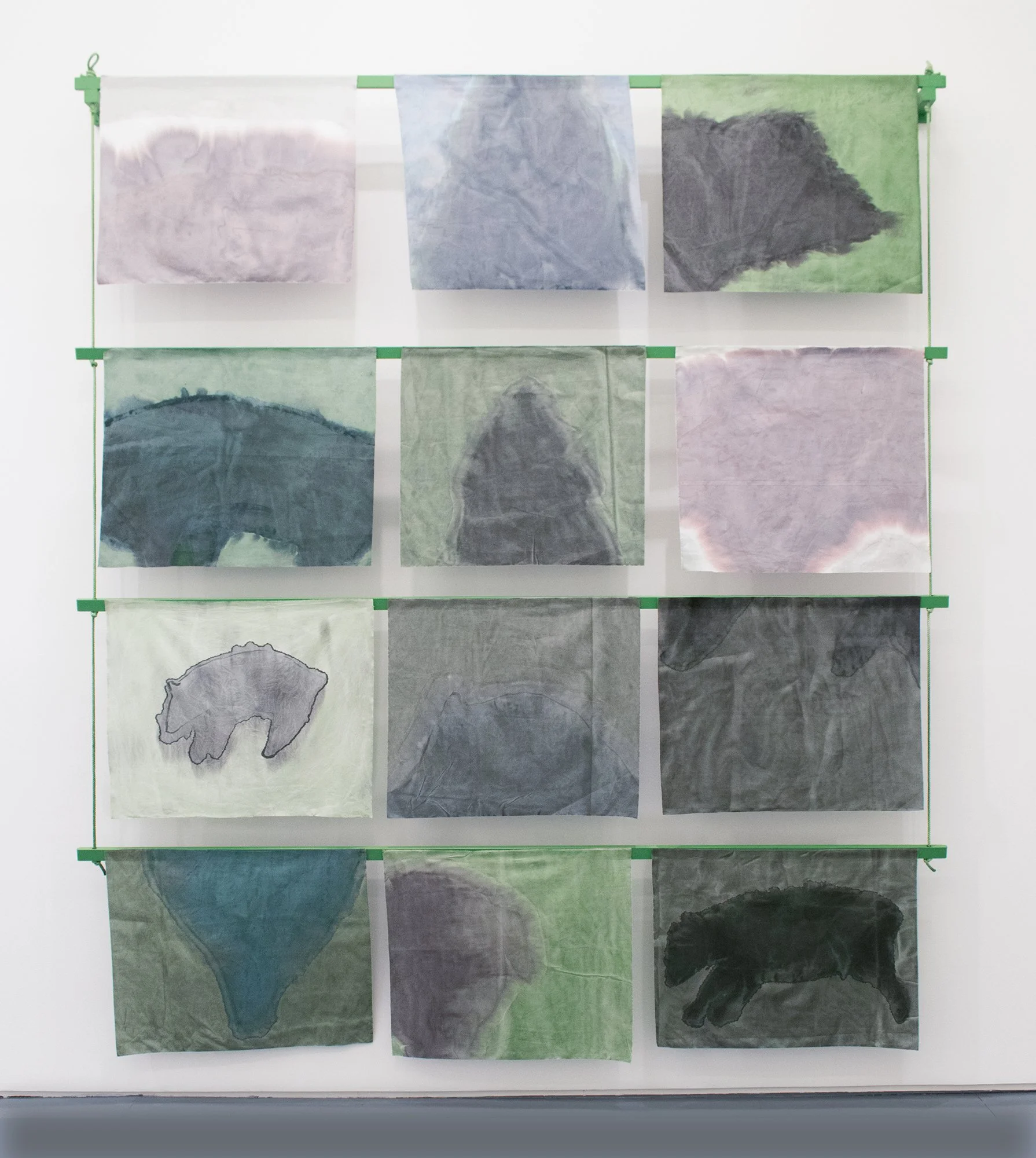
Song of Amergin (Floating with wooden support), Am Torc Ar Gail/I Am A Strong Wild Boar, 2019, Acrylic, dye, muslin, rope, wood, 120” X 96” X 6," Installation view ii
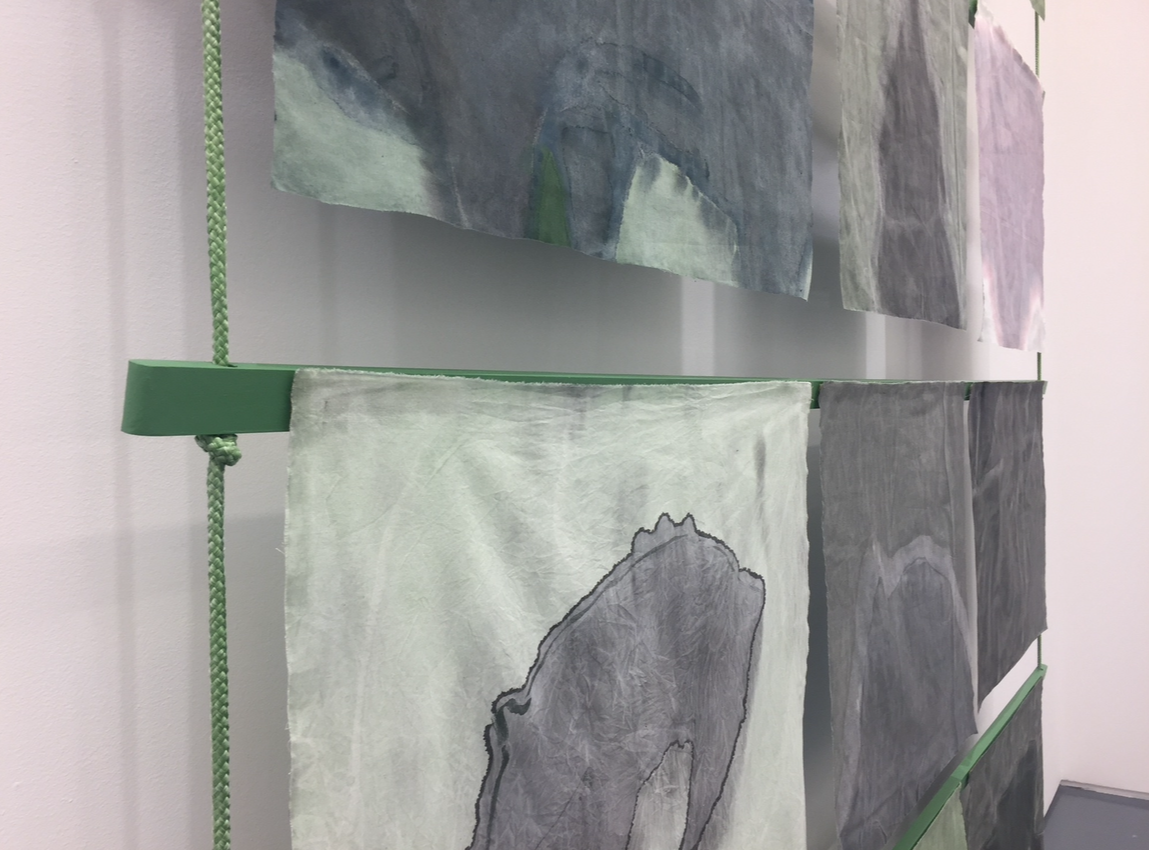
Song of Amergin (Floating with wooden support), Am Torc Ar Gail/I Am A Strong Wild Boar, 2019, Acrylic, dye, muslin, rope, wood, 120” X 96” X 6," detail i
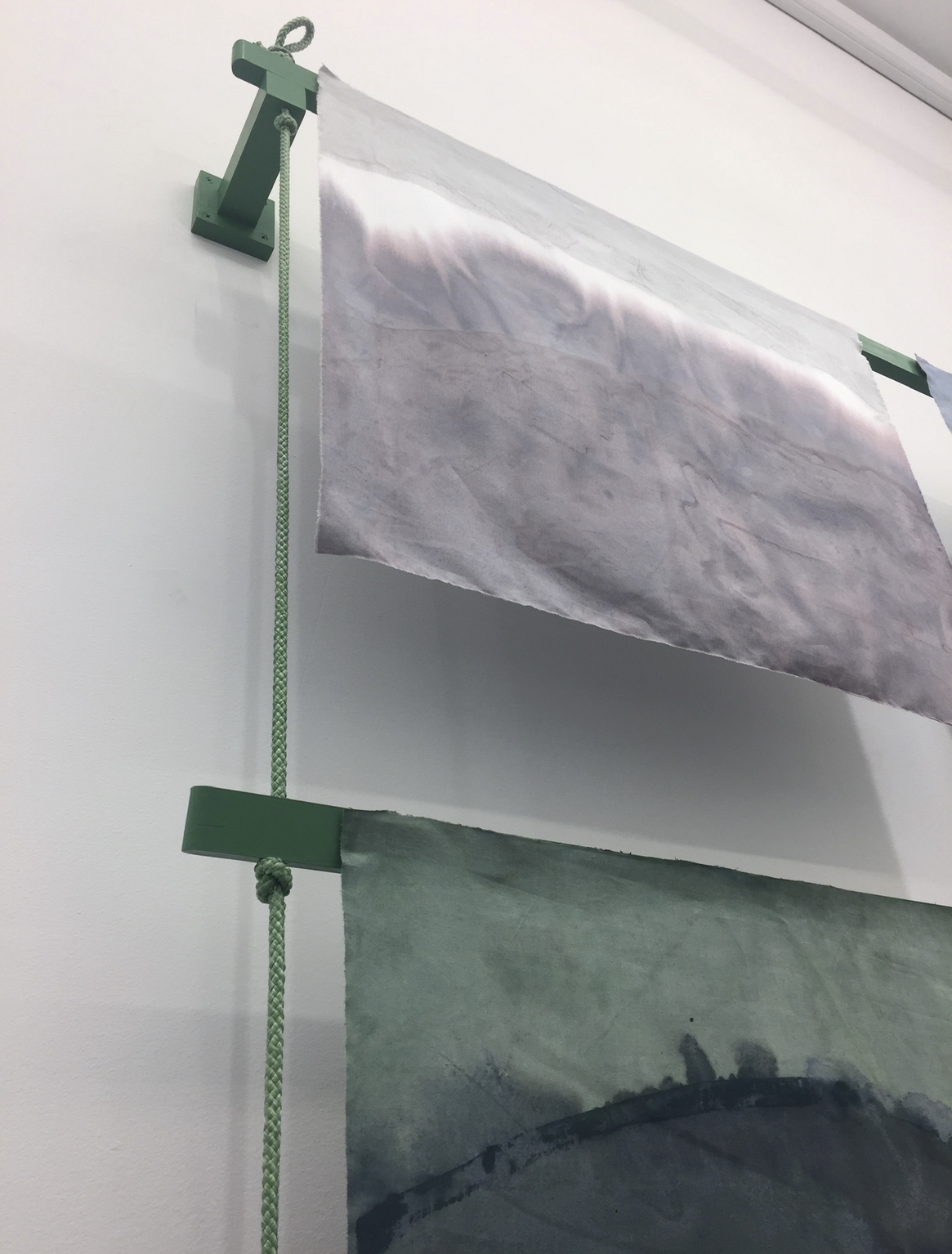
Song of Amergin (Floating with wooden support), Am Torc Ar Gail/I Am A Strong Wild Boar, 2019, Acrylic, dye, muslin, rope, wood, 120” X 96” X 6," detail ii
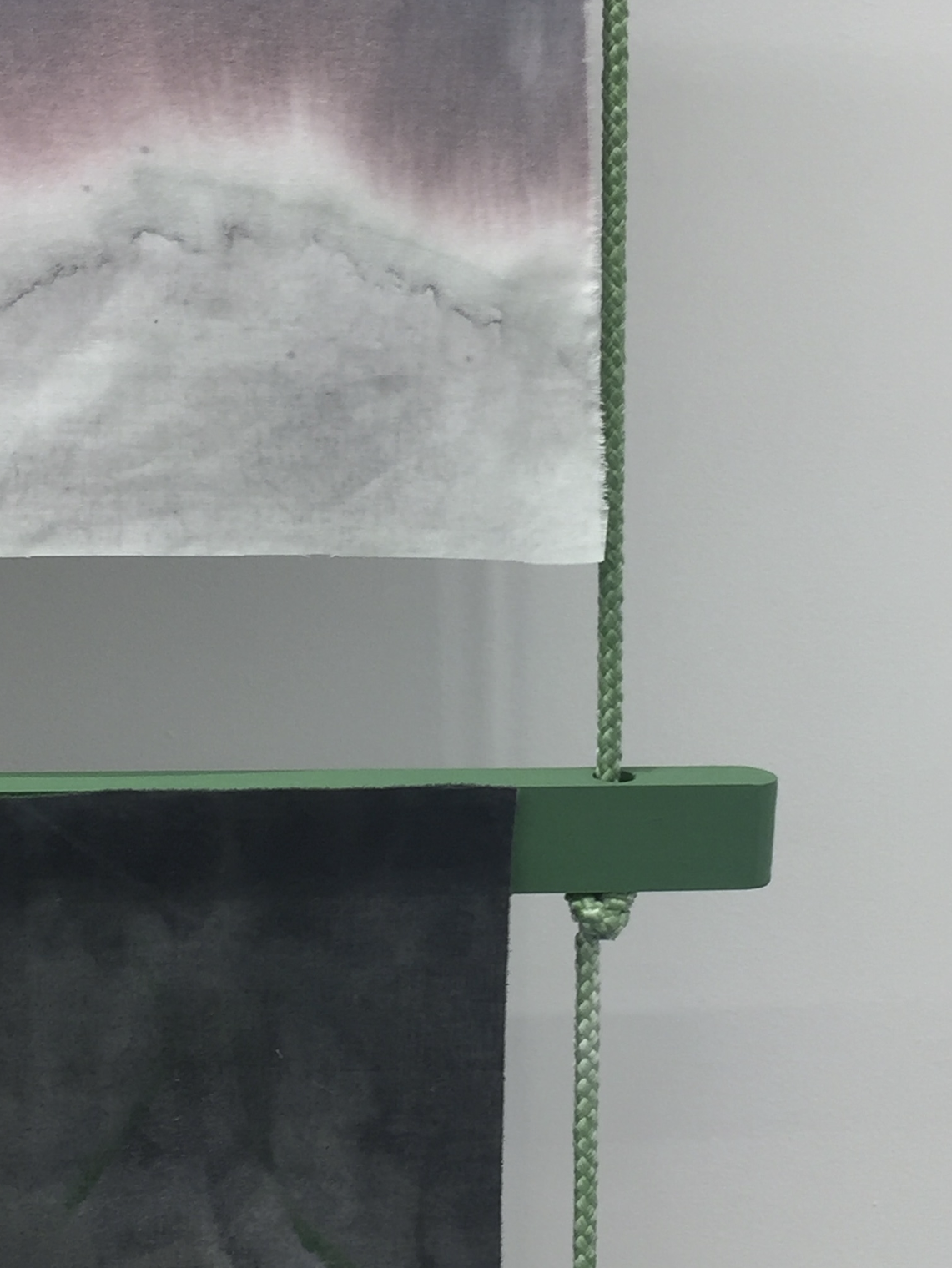
Song of Amergin (Floating with wooden support), Am Torc Ar Gail/I Am A Strong Wild Boar, 2019, Acrylic, dye, muslin, rope, wood, 120” X 96” X 6," detail iii
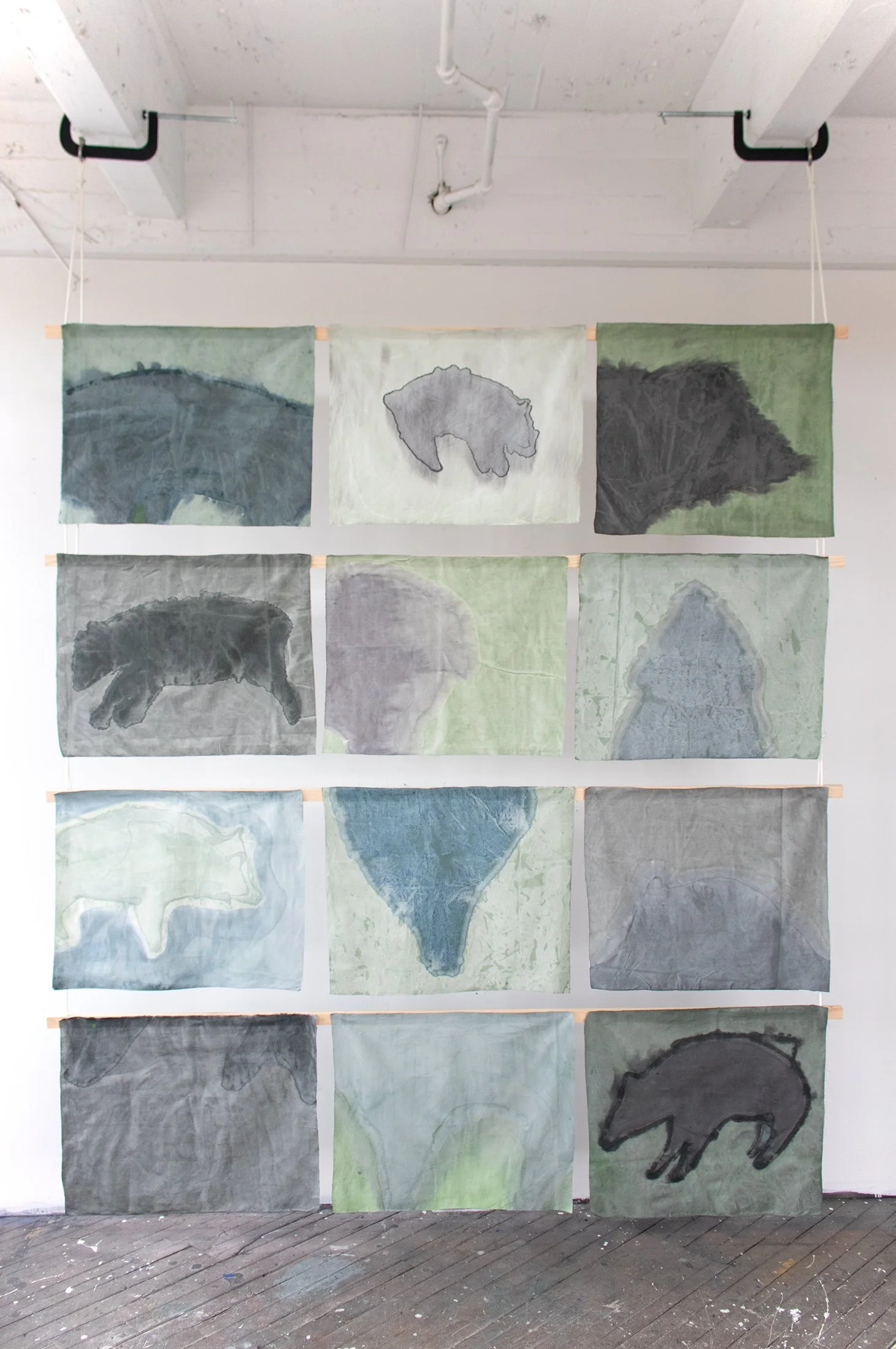
Song of Amergin (Floating with wooden support, clamps), Am Torc Ar Gail/I Am A Strong Wild Boar, 2019, Acrylic, dye, muslin, rope, wood, 120” X 96” X 1”
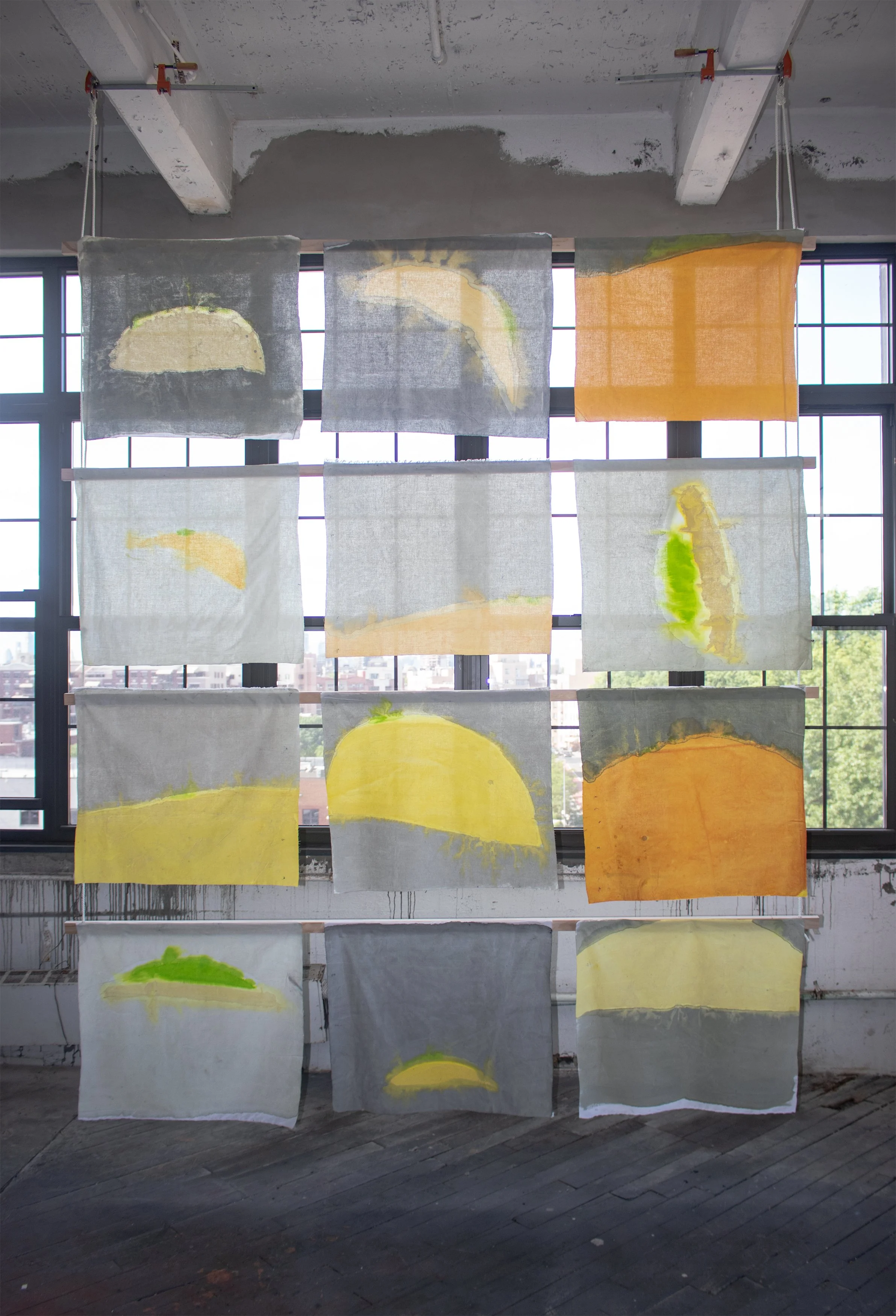
Song of Amergin (Floating with wooden support, clamps), Am séig i n-aill/I am the tear of the sun, 2019, Acrylic, dye, muslin, rope, wood, 120” X 96” X 1”
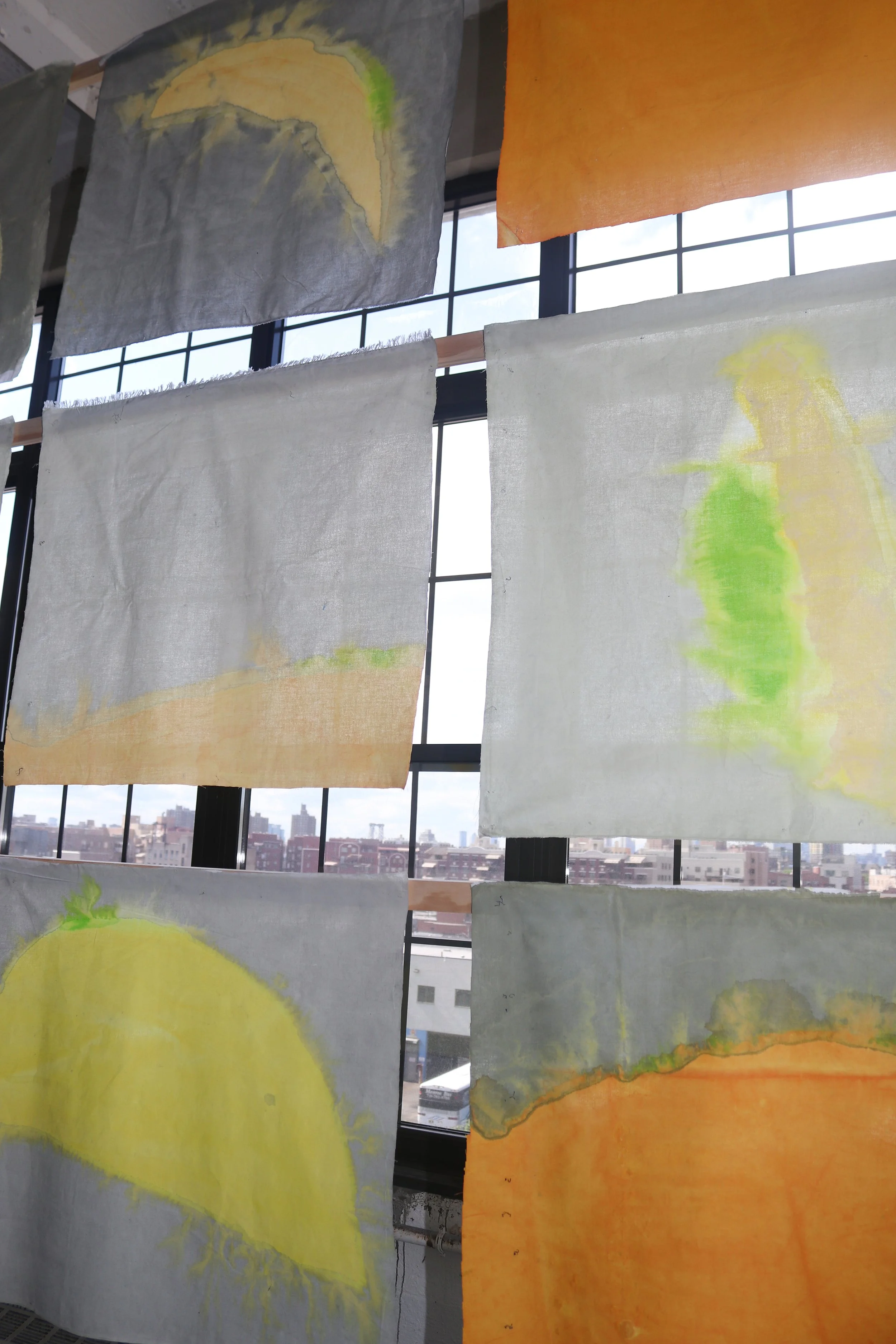
Song of Amergin (Floating with wooden support, clamps), Am séig i n-aill/I am the tear of the sun, 2019, Acrylic, dye, muslin, rope, wood, clamps, 120” X 96” X 6," detail i
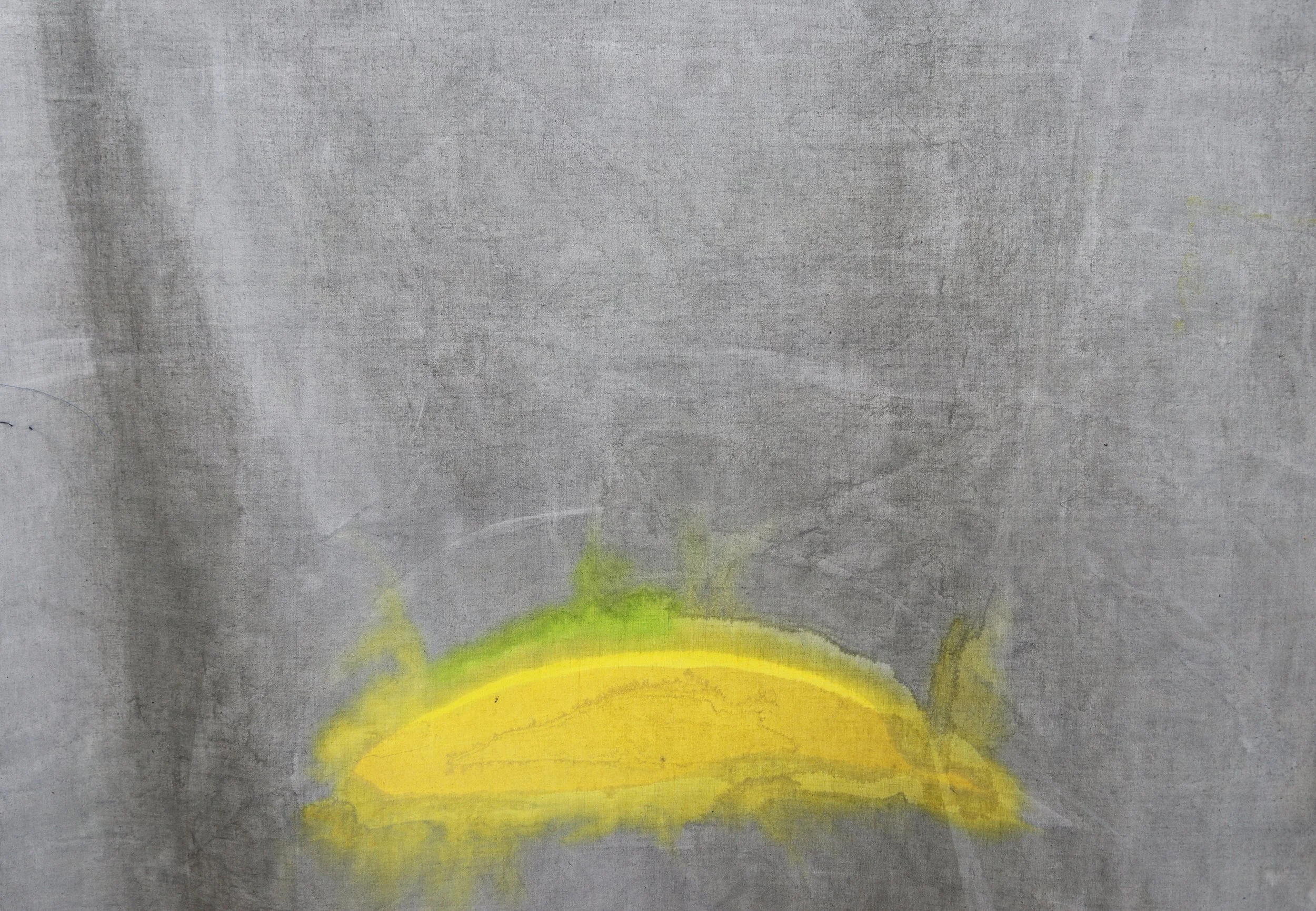
Song of Amergin (Floating with wooden support, clamps), Am séig i n-aill/I am the tear of the sun, 2019, Acrylic, dye, muslin, rope, wood, 120” X 96” X 6," detail ii
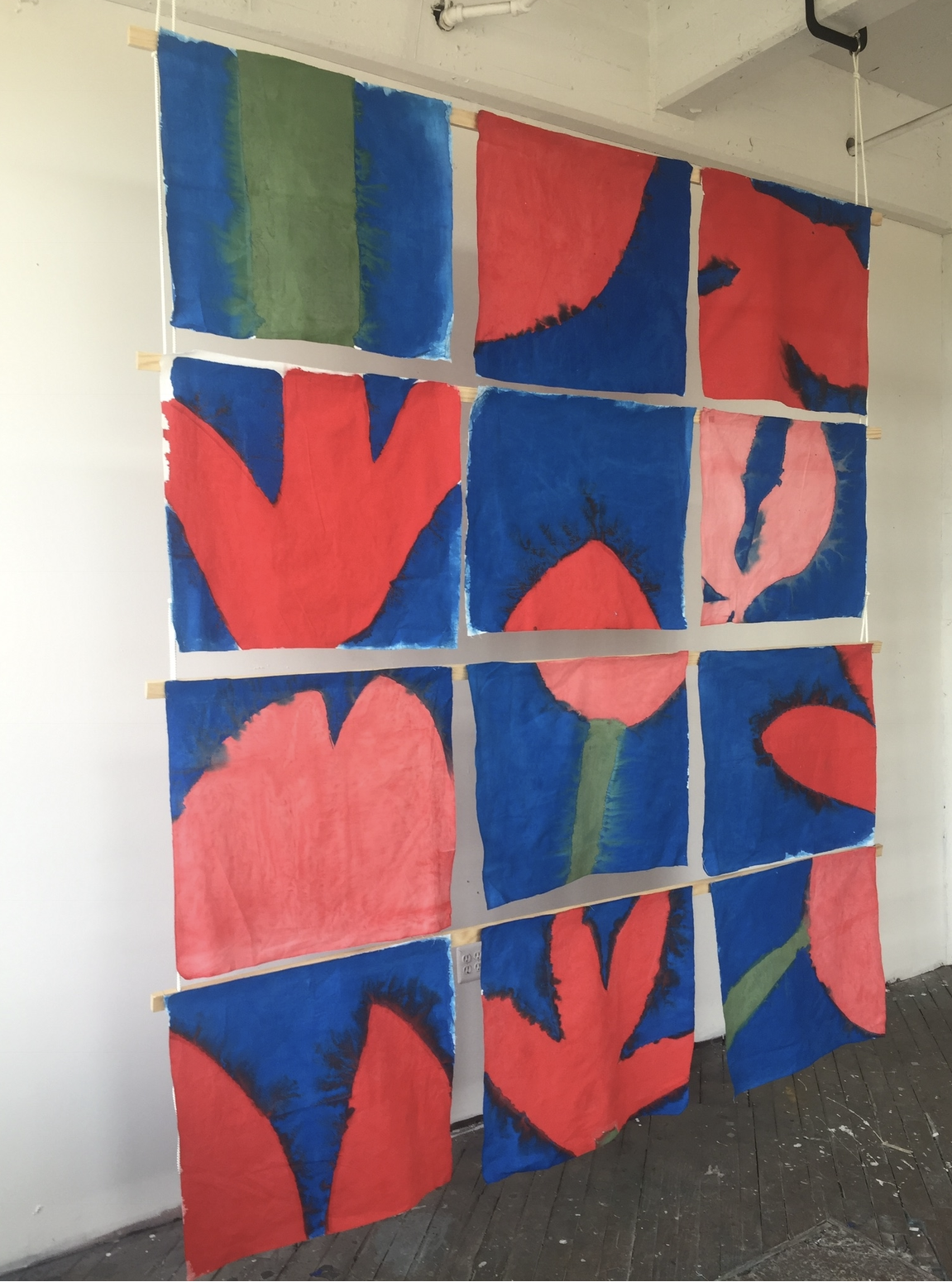
Song of Amergin (Floating with clamps), Am cain lubai/I am the most beautiful of plants (i), 2019, Acrylic, dye, muslin, rope, wood, clamps, 120” X 96," view i
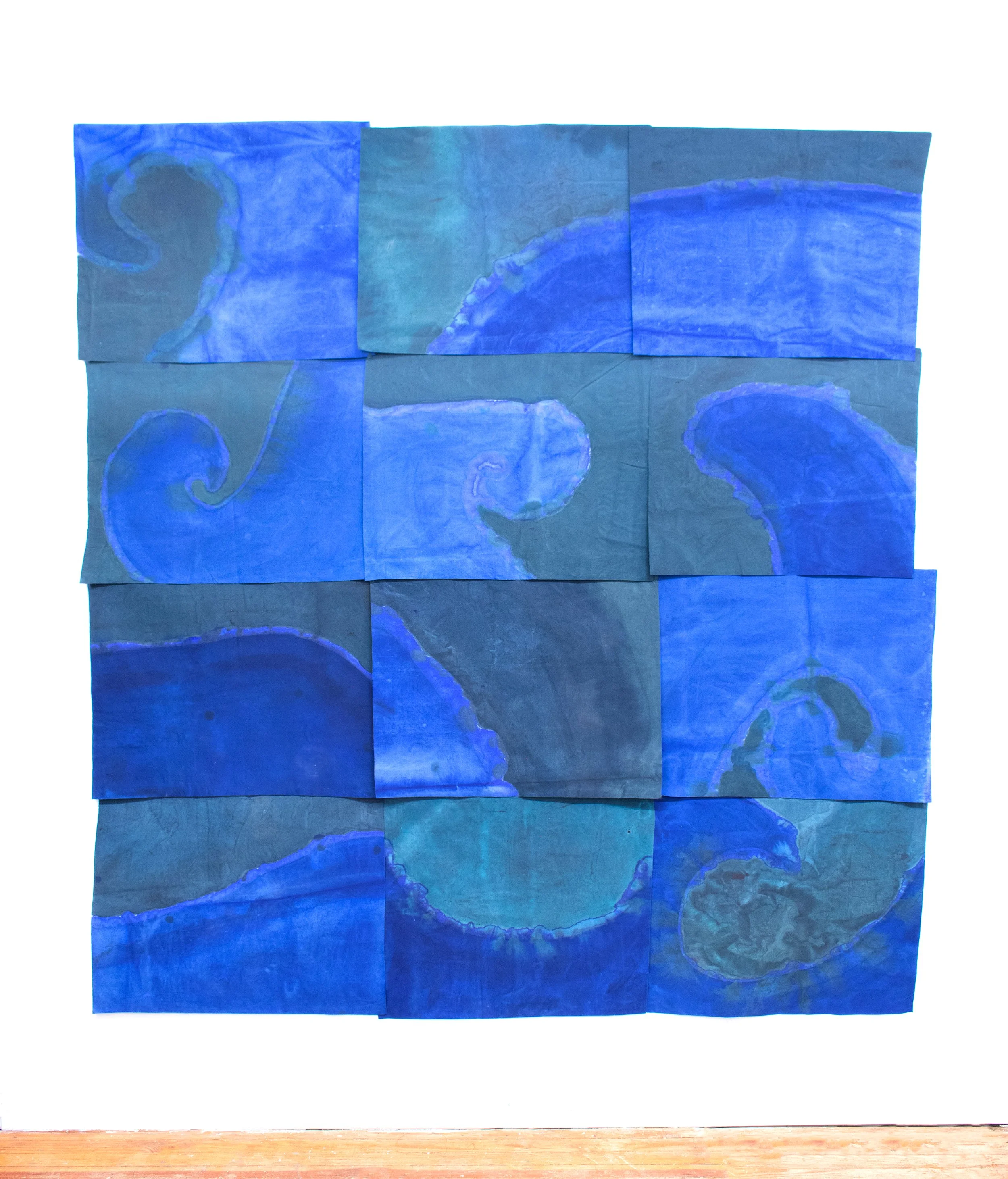
Song of Amergin (Pinned), Am tond trethan i tír/I Am The Wave Of The Sea, 2019, Acrylic, dye, muslin, map pins, 96” X 84”
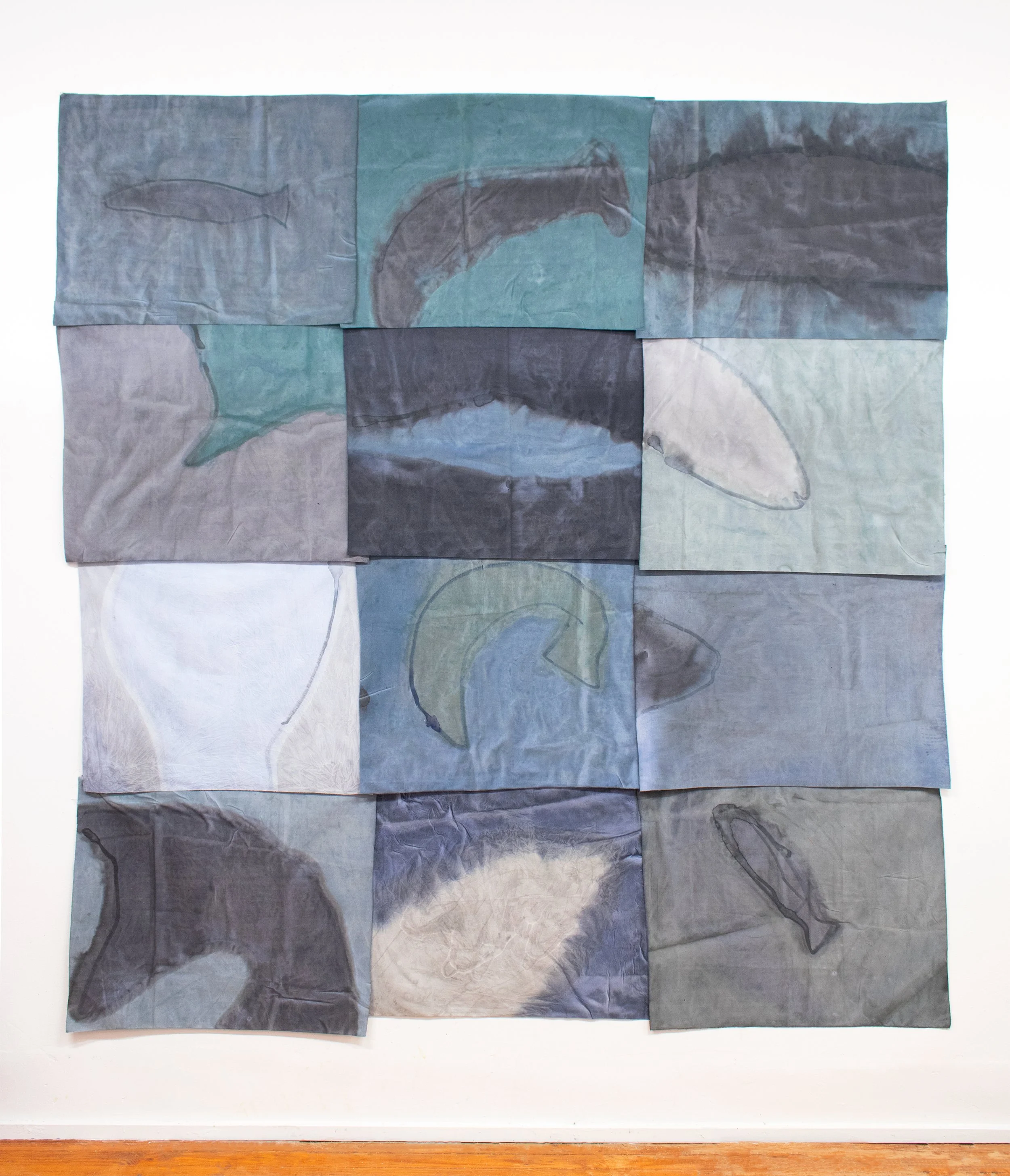
Song of Amergin (Pinned), Am hé i llind/I Am a salmon in the water, 2019, Acrylic, dye, muslin, map pins, 96” X 84”
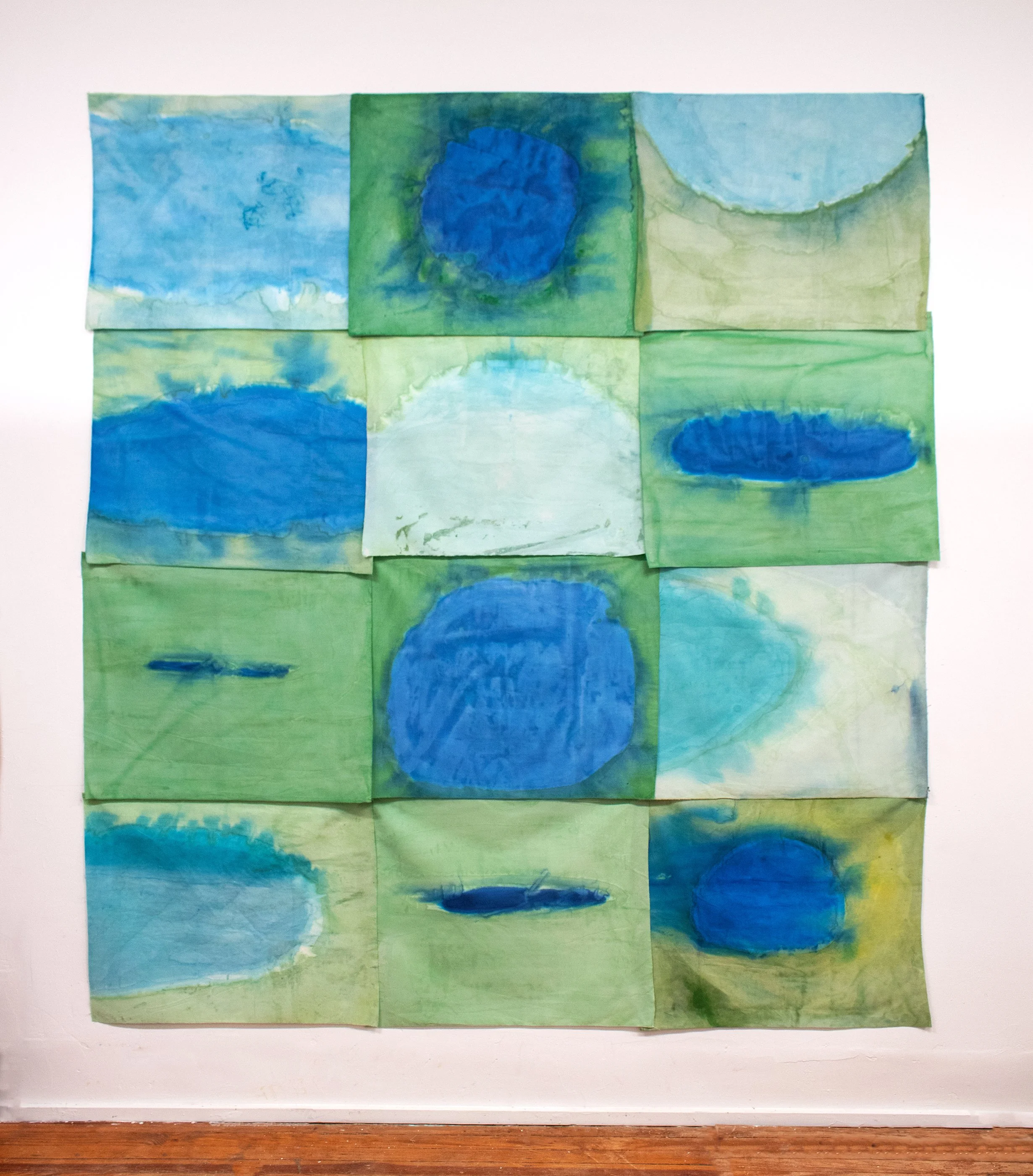
Song of Amergin (Pinned), Am loch i mmaig/I Am A lake in the plain 2019, Acrylic, dye, muslin, map pins, 96” X 84”
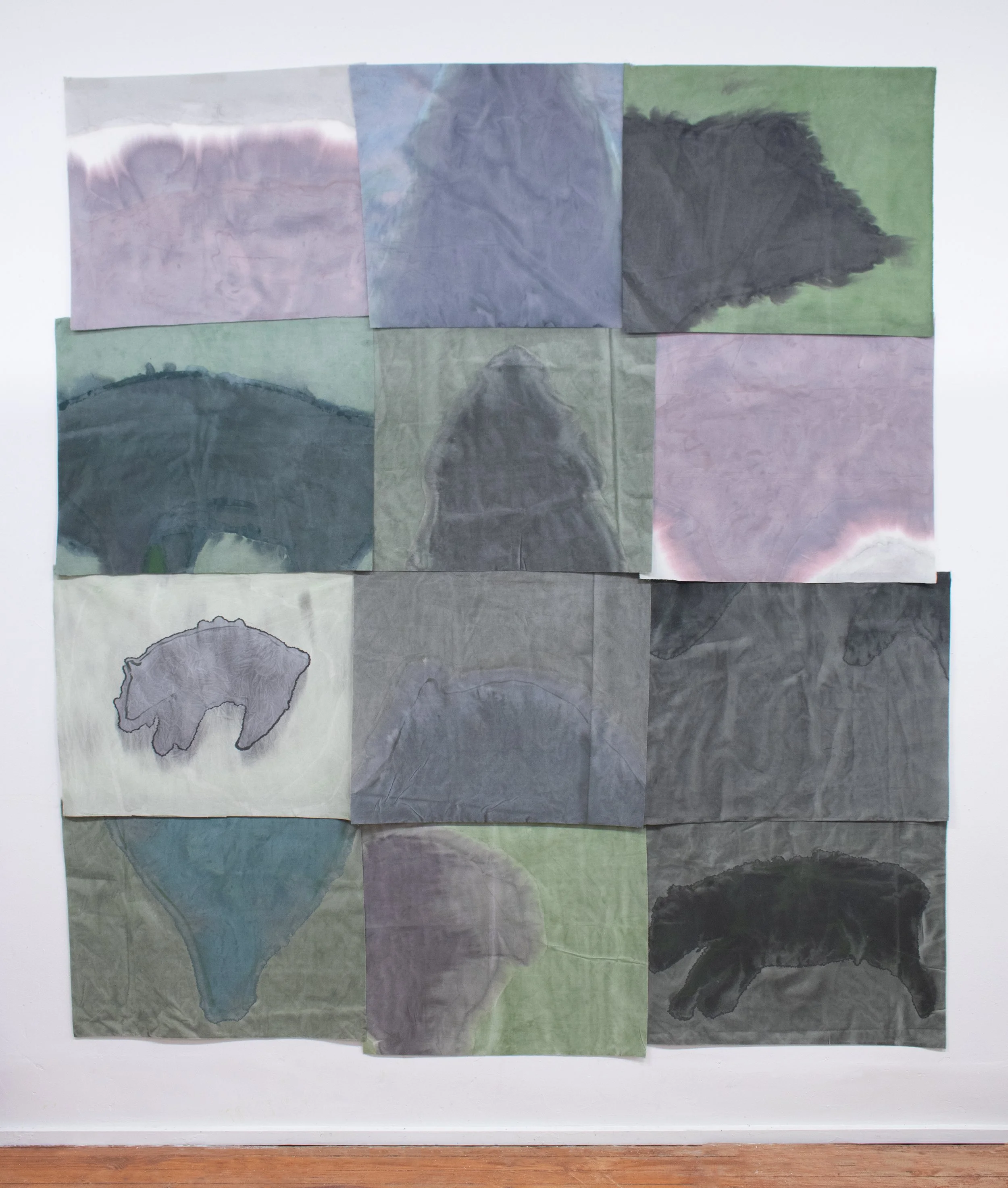
Song of Amergin (Pinned), Am torc ar gail/I Am A Strong Wild Boar, 2019, Acrylic, dye, muslin, map pins, 96” X 84”
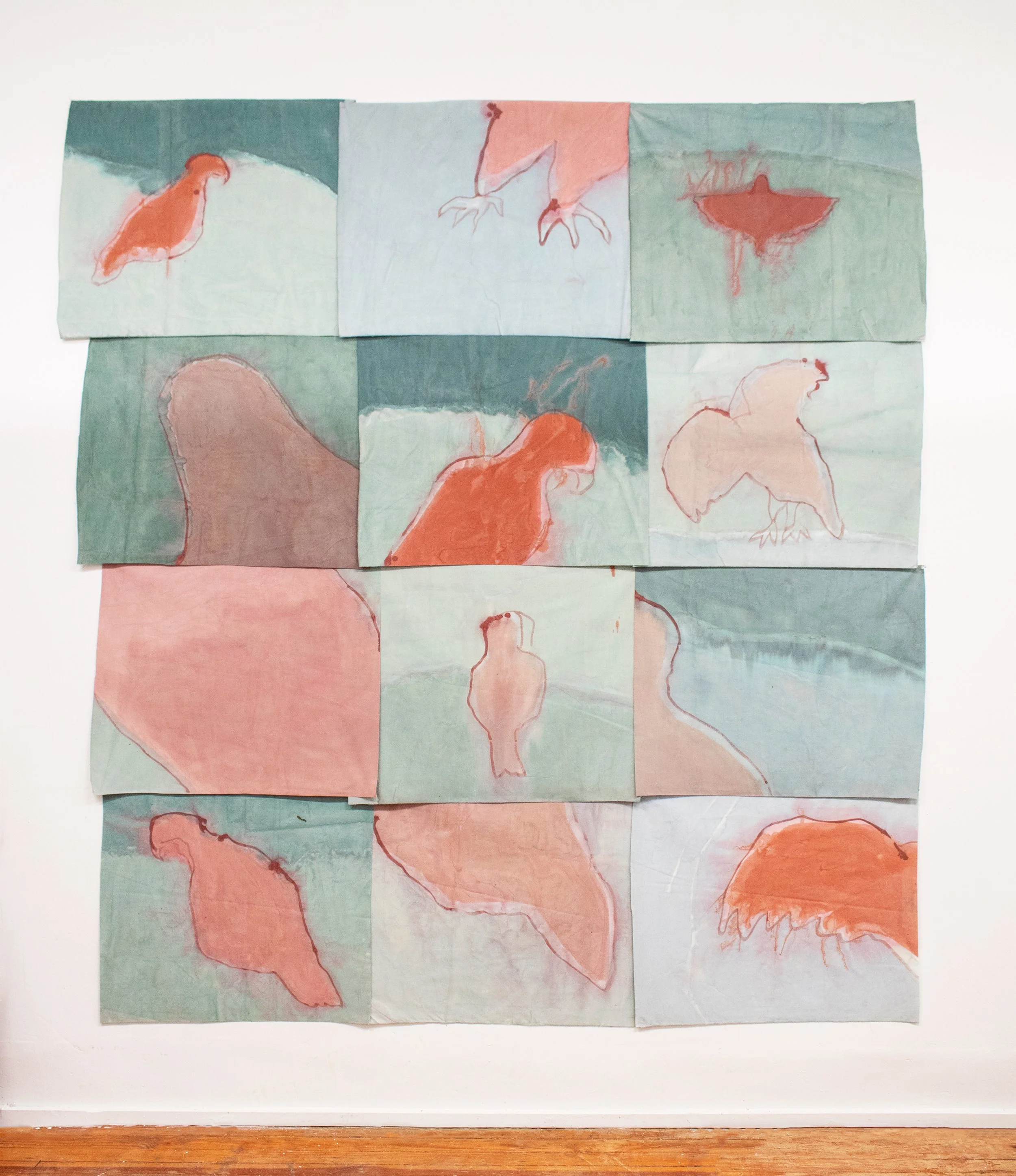
Song of Amergin (Pinned), Am séig i n-aill/I Am The Eagle on the rock, 2019, Acrylic, dye, muslin, map pins, 96” X 84”
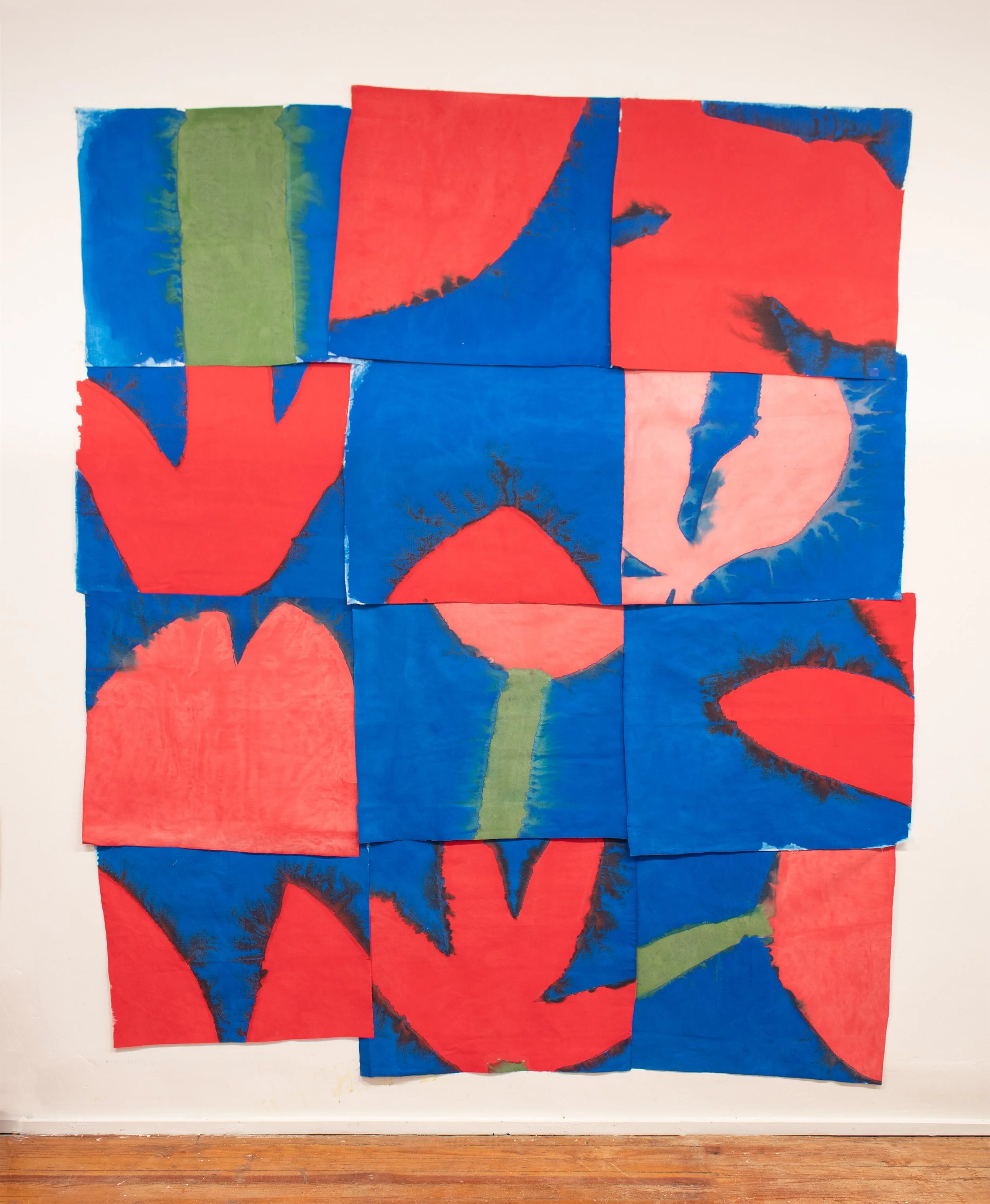
Song of Amergin I (fixed to the wall by map pins) Song of Amergin (Pinned), Am caín/I Am The Most Beautiful of Plants, 2019, Acrylic, dye, muslin, map pins, 96” X 84"
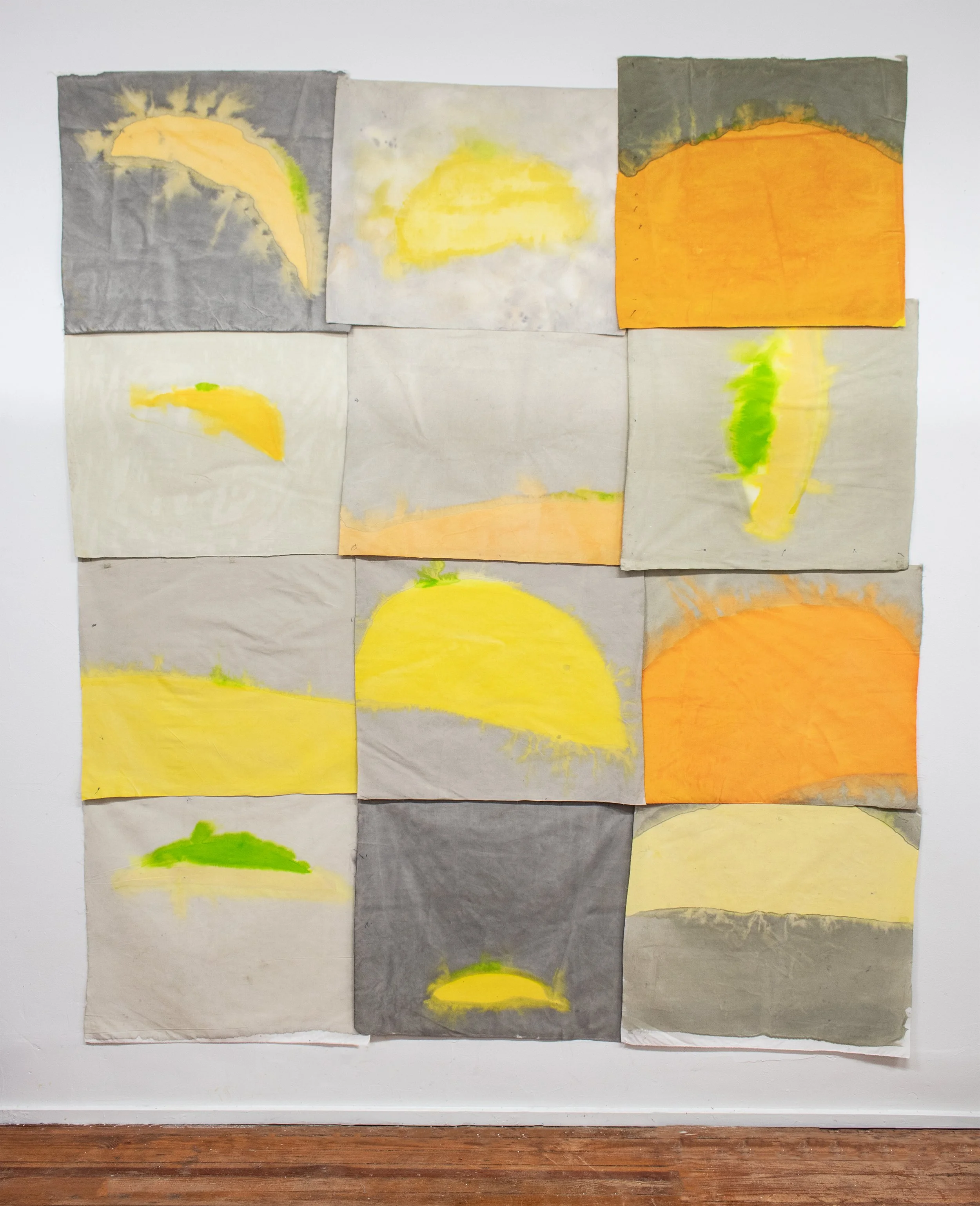
Song of Amergin (Pinned), Am dér gréne/I Am A Flash of the Sun, 2019, Acrylic, dye, muslin, map pins, 96” X 84”
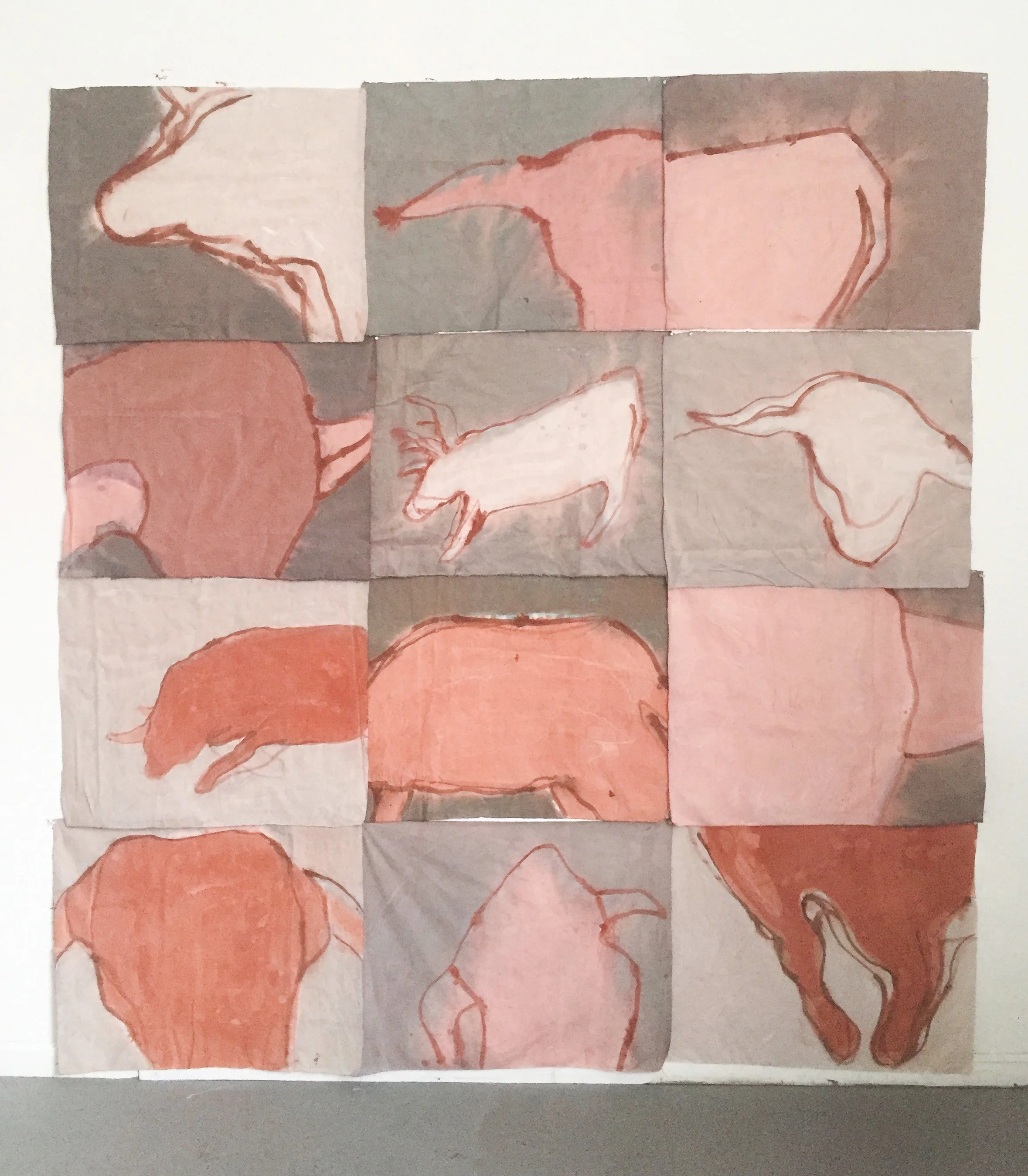
Song of Amergin (Pinned), Am dam secht ndírend/I Am A Bull Of Seven Fights, 2019, Acrylic, dye, muslin, map pins, 96” X 84”
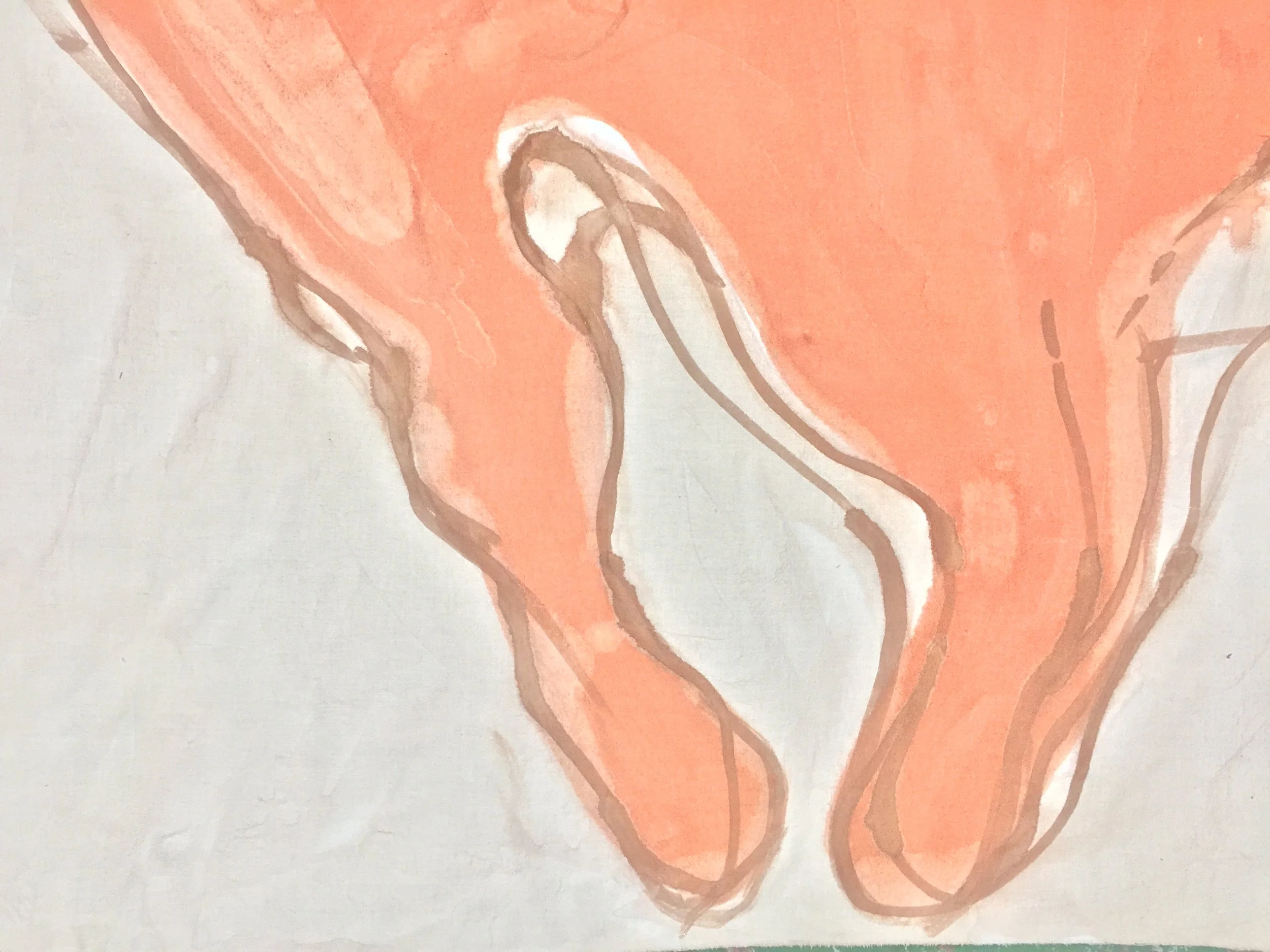
Song of Amergin (Pinned), Am dam secht ndírend/I Am A Bull Of Seven Fights, 2019, Acrylic, dye, muslin, map pins, 96” X 84”, detail